Showing posts with label movies. Show all posts

Monday, June 20, 2016

Margaret Kennedy Day - The Wild Swan

Roy Collins is a scriptwriter with B.B.B, a major English film studio. He has ambitions to write & direct his own scripts but his current assignment is to work on the shooting script for a historical picture selected for one of the studio's leading stars, Kitty Fletcher. Dorothea Harding was a Victorian lady writer of children's stories & twee poetry. After her death, however, a diary & passionate poetry was discovered & literary critics, including Alec Mundy, interpreted the poems as an expression of illicit love between Dorothea & her brother-in-law, Grant Forrester. Grant's early death was seen as suicidal despair over the impossibility of his love for Dorothea. Mundy's biography was the basis of a play by Adelaide Lassiter, a writer of sentimental platitudes who calls Dorothea Doda & is now writing the screenplay for the movie.

Adelaide wants to absorb the atmosphere of Bramstock, Dorothea's home which is still owned by members of the Harding family so she goes down to see the house, accompanied by Roy, Mundy & hanger-on Basil Cope. Now very hard up, the Hardings have reluctantly agreed to allow their house to be used for the filming, knowing that the money will pay for daughter Cecilia's college education. Cecilia is proud & resentful of the whole idea, dismissing Dorothea's work as Victorian tosh but she becomes interested in Roy despite looking down on his origins (his aunt lives in the village where the Hardings are the local squires) & what she perceives as his lack of ambition. Roy begins to feel an affinity with Dorothea as he walks around the grounds of Bramstock & begins to realise that the sentimental story of her life is wrong. He becomes determined to stop the movie from going ahead because he feels somehow akin to Dorothea & protective of her story.

But it's not Cecilia's fault that she doesn't understand, thought Roy. None of them do. They all think it's their job to tell us what to put. And we have to laugh it off.
They, to him, were the entire human race. We were Dorothea Harding, himself, and a myriad nameless others, swimming, sinking, fighting for life, in the same inclement ocean.
He lifted his head, smiled, and went back to the hotel in better spirits than he had known for many a day, sensible that he had, after all, got company.

Another descendant of the Harding family, Shattock, is in possession of potentially explosive documents that could change the image of Dorothea as the Victorian poetess & potentially scupper the making of the movie. The central section of the book takes us back to the time of Dorothea herself & we learn just how mistaken the ideas of biographers can be as the truth of her life & the reason she wrote her inane but successful novels becomes clear.

The Wild Swan is a novel that reminded me of other books about writers & their literary afterlives. Like A S Byatt's Possession & Carol Shields' Mary Swann, the central conceit of a writer from the past whose life has been misinterpreted & taken over by modern academics is one that has always fascinated me. The idea that we can ever really know a person from another age, no matter how much material they leave behind is fraught with danger. Material is always turning up & there are plenty of real life examples as well as fictional ones. Charlotte Brontë's letters to Monsieur Heger are probably the most famous example but there are plenty of gaps in our knowledge of historical figures that novelists & playwrights have tried to fill in & sometimes their version becomes the truth.

I enjoyed seeing the real Dorothea, who was a much tougher, more resilient woman than her admirers imagined. Her life was circumscribed by the duties of a Victorian daughter. She was able to get on with her writing & go her own way while her older sister, Mary, was at home. Mary's marriage to Grant will be the catalyst that reluctantly forces Dorothea into the role of housekeeper to her demanding father. Her invalid brother & his wife & children also live at Bramstock & Dorothea's relationship with her sister-in-law, Selina, is difficult. Dorothea's cousin, Effie Creighton, is sympathetic, & as one of the few people who know about Clone, the imaginary world Dorothea & her sister invented as children, she understands how important Dorothea's work is to her. However, her mother does not approve of Dorothea & eventually marriage takes Effie away. The rector, Mr Winthorpe, is seen as a benign presence & an influence on Dorothea's writing by Mundy but his desire to control Dorothea is typical of a conventionally Victorian moral world. He's disconcerted by Dorothea's unusual self-possession & tries to persuade her into a more conventional role while he fears that she is secretly laughing at him.

The contemporary story was also fascinating. Written in 1957, it's set in that awkward post-war period when upper & middle class families were having to adjust their expectations. The Hardings are still the local squires but they're poor. Cecilia may still boss around the women of the local W.I but Bramstock is rundown & she knows her father can't afford to send her to college. The offer from the film company is embraced by Cecilia's practical mother although her father is horrified by the implication of stooping to the depths of taking money from something as vulgar as a movie company & about a family member at that. Cecilia's contempt for Roy (her father initially mistakes him for "the plumber's mate" & Cecilia calls him that in her mind for quite a while) changes to interest as she discovers more about him. When she learns that he's written an avant garde short film that she's seen & enjoyed, she has to reassess her prejudices & finds herself liking him quite a lot. Roy's feelings for her are more ambiguous. I also enjoyed the pompous Mundy & his superior attitude to Adelaide's play while she was much more like the accepted image of Dorothea than the real woman could ever have been. Everyone has an image of Dorothea in their minds that suits their own plans but the truth will surprise them all.

Thank you to Jane at Beyond Eden Rock for hosting Margaret Kennedy Day. It was a great incentive to read another of her novels.

Tuesday, April 21, 2015

Vera Brittain and the First World War - Mark Bostridge

The new movie based on Vera Brittain's autobiography Testament of Youth is just about to be released in Australia. Testament of Youth is one of my favourite books & I've already posted about it here so there's not much chance that I won't go along to see the movie (you can see the trailer here). Mark Bostridge co-wrote a biography of Vera with Paul Berry, her literary executor & he was a consultant on the new film. This book, which combines biography with the story of how Testament of Youth was written & the afterlife of the book as television series, ballet & now film, is a useful introduction to Vera Brittain's life.

I have to say that this book is probably most useful to someone who sees the movie & wants to know a little more about Vera's life. Having read everything I can get my hands on by & about Vera since reading Testament of Youth in the late 70s, there wasn't anything very new here. The first chapters tell the story of Vera's life as a provincial young lady in Buxton, her struggle to be allowed to study at Oxford, her close relationship with her brother, Edward & her meeting with Roland Leighton, the young man she fell in love with & who was killed just before Christmas 1915. Vera had decided to postpone her studies to become a Voluntary Aid Detachment nurse & worked in hospitals in London, Malta & France. After the war, when she had lost everyone who was closest to her, Vera returned to Oxford, meeting Winifred Holtby, who became her closest friend, & becoming a writer & lecturer, living in London. Vera married George Catlin in 1925 & had two children, but her wartime experiences never ceased to occupy her thoughts & she tried many different ways of telling her story.

War memoirs weren't wanted in the immediate aftermath of the war & it wasn't until the late 1920s that people wanted to read about the war. Vera had tried to reimagine her experiences as fiction; she tried to have her wartime diary published but finally she decided to write a memoir of her life which would take in more than just the war years. Testament of Youth covers 1900-1925, Vera's childhood in Buxton, her desire to study & the years after 1918 when Vera tried to make a new life for herself after the shattering experiences & losses of the war. At the core of the book, however, are those four years of the war & the very personal story she tells of her love for Roland, her friendships with two other men, Victor Richardson & Geoffrey Thurlow, her love for her brother, Edward, & her own war service as a nurse. As well as telling her own story, Vera wrote the book as a tribute to the men she lost & also to emphasize the fact that women & women's work played a vital part in the war effort. Testament of Youth was one of the first books to explore women's experiences of the war. It may not have been the first book to do so but it was certainly the most successful.

The success of Testament of Youth changed Vera's life. I enjoyed reading about the way Vera went about writing the book, because I love reading about how writers work, the changes she made to her feelings & responses to events as shown in her diaries & letters of the time & the way she shaped the narrative. The most interesting section of this book was the description of how Testament of Youth was rediscovered in the 1970s (unfortunately after Vera's death) by Virago which led to the wonderful TV series with Cheryl Campbell. The feminist movement was instrumental in rediscovering books like Testament of Youth that described the experiences of women in a conflict dominated by the war memoirs & poetry of men - Wilfred Owen, Siegfried Sassoon & Robert Graves. I didn't know that a ballet, Gloria, by Kenneth MacMillan, had been based on the book.

The production of the new movie is described with Bostridge's personal experiences of being on the set. There's also a chapter taken from Lives For Sale, a book about the experiences of biographers edited by Bostridge that explores in more depth the death of Edward Brittain & how Bostridge wrote his biography in collaboration with Paul Berry. Lives For Sale, by the way, is an excellent book about the writing of biography with chapters by Antonia Fraser, Hermione Lee, Lyndall Gordon, Margaret Forster & Claire Tomalin among many others. Bostridge also includes a Gazetteer of the places associated with Vera's life & there are many photos included throughout the text as well as colour plates from the new film. So, I would have to say that this book is really only for the Vera Brittain completist (like me) or for someone who sees the film & wants to explore Vera's life a little more. I'd be more inclined to say, read Testament of Youth, I'm sure I'll be rereading it after seeing the new movie but if 600+pp is a little daunting, this book does concentrate on the period of the film.

On a bit of a tangent, I came across this wonderful blog, A Bluestocking Knits, where I read this fascinating post on the accuracy or otherwise of the knitwear in the new film. There's also a link to this article in Harper's Bazaar on the costumes, including some gorgeous hats. (Have a look at the Bluestocking's post on the TV series Outlander as well - haven't seen the series but loved the first four books before I lost interest). I'm sure I'll be nitpicking about any changes to the book in the screenplay but the clothes look fabulous.

Tuesday, March 24, 2015

Crime on my Hands - George Sanders

One of my favourite scenes in Alfred Hitchcock's Rebecca is during the inquest. The wreck of a boat has been found, a boat that contains the body of a woman, Rebecca De Winter. An inquest is called & Rebecca's widower, Maxim, is being asked some very difficult questions about the night his wife disappeared. During the luncheon adjournment, Maxim & his new wife are sitting in their Rolls Royce not eating the lunch sent from Manderley by their staff. Rebecca's louche cousin, Jack Favell, played by George Sanders, slides into the car, eats a chicken leg & tosses it out of the window, all the while making sly insinuations about Rebecca's death & threatening blackmail in the most suave way (you can see this scene here).

George Sanders made a living playing suave, smooth cads in Hollywood movies from the 30s to the 50s, including his Oscar-winning role as critic Addison De Witt in All About Eve. He also wrote, or co-wrote, two mysteries, Crime on my Hands, & Stranger at Home, as well as an autobiography, Memoirs of a Professional Cad. All three books have just been reprinted by Dean Street Press. I've just spent several very enjoyable hours reading Crime on my Hands. The story is narrated by George & I could hear his voice in every line. What a pity he's not still around to narrate the audio book.

As well as playing cads, George Sanders also made a successful series of mystery films playing a detective known as The Falcon. When the novel opens, George is making yet another Falcon movie & is starting to feel typecast. His agent, Melva, gets him a terrific part as the lead in a pioneer Western epic also starring screen goddess Carla Folsom. This could be the role that sends George's career in a whole new direction. The company are shooting a scene on location, when one of the extras is shot. It looks like a tragic accident, one of the prop guns must have been loaded with live ammunition rather than blanks. When it emerges that the man was shot with George's gun, a different calibre to the other weapons, which has since gone missing, it looks as though George is being framed for murder.

How different this was from my screenplays. As The Saint, or The Falcon, I had been confronted many times with situations more baffling than this, and always I had penetrated to the heart of the matter, seen a clue, reconstructed the situation and acted unerringly. But here was a nameless bearded corpse sprawled inside the circle of wagons on baking sand. There were no dropped collar buttons, no cartridges of an odd caliber, no telltale footprint with a worn heel, no glove lost in haste. ... A nameless corpse, and the only clue to the killer was my gun, planted by a nameless hopeful who thought he could match wits with me. Only, this time the lines weren't written for me. I had to make them up as I went along.

However, it seems that the extra, listed as Herman Smith, wasn't Herman Smith at all, but Severance Flynne, an unsuccessful small-time actor who changed places with Smith, but with what motive? All the extras wore beards, so had the bullet been intended for Smith or Flynne? George is drawn into the investigation & there seem to almost too many suspects - Riegleman, the director, anxious not to lose any time on a strict shooting schedule; Sammy, the prop man who should have made sure the weapons were safe; Paul, the casting director who was supposed to keep track of the extras. Then, there's Carla Folsom & Wanda Waite, both actresses with a lot riding on the picture for their future careers. Somebody in the cast & crew must have known Flynne but who was it & what could have been their motive to kill him?

Deputy Sheriff Lamar James is an intelligent, ambitious policeman who can run rings around his boss, Sheriff Callahan. He reluctantly allows George to do some investigating on his own & George is soon entangled in more complications than he imagined possible. The murder was caught on camera but when not only the murder weapon but also the vital reel of film go missing, George looks like the only viable suspect. He needs to not only clear his own name but find the murderer if he's going to avoid arrest - & the end of the best career break he's ever had. Then, when the vital scene is reshot & George deduces that the shot had to be fired from behind the camera, the circle of suspects narrows, more murders are committed & George finds his own life in danger.

Crime on my Hands is a fantastic mystery. The atmosphere of a film set in the 40s is fascinating & I loved the evocation of the whole Hollywood system. George's agent, Melva Lonigan & his press agent, Fred, are terrific. They're totally committed to George's career - & the cut they take of his earnings. Melva is smart & sassy, I imagined her played by Myrna Loy or Rosalind Russell. Vampy Wanda Waite could be played by Lana Turner & maybe a young Henry Fonda as Lamar James? I couldn't help casting the movie in my head as I read. The producer of the movie, Brewster Wallingford, must have been at least partly based on director Michael Curtiz. Curtiz' mangling of the language was notorious in Hollywood; David Niven used one of his most famous phrases, "Bring on the empty horses" as the title of one of his memoirs.

George Sanders is a witty narrator with a very dry, self-deprecating sense of humour. I found him infinitely more charming on the page than I ever have in the movies. For me, he'll always be Jack Favell or Miles Fairley, the sly cad in The Ghost and Mrs Muir. I really want to track down more of his movies now though. I'd like to see him playing a charming character rather than a cad. I don't know how much of the book Sanders actually wrote, it's co-written with Craig Rice, a popular crime writer who had written screenplays for Sanders' films. The dedication reads To Craig Rice, without whom this book would not be possible. George in the book certainly seems to owe quite a bit to Sanders' screen persona & aspects of his life such as his hobby as an inventor & his ability to cook are featured. I don't know that it really matters how much of the book is Sanders & how much is Rice. I enjoyed it very much & I think any fan of 1940s Hollywood or classic detective fiction would enjoy it too.

Dean Street Press kindly sent me review copies of all three George Sanders books that they're reprinting & I'm looking forward to reading the others. They also have plans to reprint other mystery authors, including Ianthe Jerrold, who was featured by Scott at Furrowed Middlebrow in his truly remarkable list of women mystery authors.

Friday, December 19, 2014

Christmas at Thompson Hall - Anthony Trollope

Christmas at Thompson Hall is one of a set of five Christmas Classics published by Penguin this year. This is the only one I bought but they all have variations on the same elegant cover with snow & cardinals on a pine tree. The other authors are Charles Dickens, Nikolai Gogol, Louisa May Alcott & E T A Hoffmann. Series like this are one of the reasons that, however much I love my ereaders, I will always want real books as well. I have these Trollope stories in my Delphi Classics ebook edition of Trollope but this little hardback was just irresistible.

The title story is about a couple traveling from the south of France to the woman's home in England. The Thompson family love getting together at Christmas but, since their marriage some years before, Mrs Mary Brown & her husband, Charles (their names have been changed to spare them embarrassment) have stayed in France rather than travel back to England for the holiday. Mrs Brown's family have become more & more upset about their defection & so, this year, even though Mr Brown has a terrible head cold, she convinces him to make the journey. When they arrive in Paris, Charles is so ill & so irritable that he almost refuses to go on. However, his wife proposes to make him a mustard plaster, having seen a jar of mustard in the dining room. So, late at night, & in her nightclothes, she begins wandering the endless corridors of the hotel.

Discovered by a porter, she is too embarrassed to admit her real errand & pretends she has lost a handkerchief. The porter insists on accompanying her to the dining room & back to her room so she then has to retrace her steps once he's gone to find the mustard & make up the plaster. Unfortunately, she gets lost on her way back to her room, enters another man's room & applies the mustard plaster to him instead. Mortified by the impropriety of this, Mary rushes back to her room & prepares to brazen it out next morning when the hotel is in uproar over the assault on a defenceless guest & the very strange behaviour of an English matron. I have to admit that this story, at almost 60pp, was too long & a bit tedious. Mary's wanderings through the hotel were interminable & the identity of the man with the mustard plaster is not difficult to work out. It's a very English story of embarrassment & a level of refinement that prevents poor Mary from just telling the truth.

Christmas Day at Kirkby Cottage is the story of a young girl, in love with a boy but unable to get past her pride & a silly quarrel when he declares that Christmas is a bore. There are many tears & misunderstandings before the happy ending. In The Mistletoe Bough, Elizabeth Garrow has broken off her engagement to Godfrey Holmes & has ever since been miserable. It takes a Christmas visit from Godfrey & his sister, Isabella, to reveal the true story of why Elizabeth broke the engagement.  The Two Generals is set during the American Civil War & concerns two brothers, each a general but one fights for the North & the other for the South. They both love the same woman & their rivalry in every area of their lives leads to the potential for betrayal one Christmas. Not If I Know It concerns a quarrel between brothers-in-law, George & Wilfred, at Christmas time & the efforts of the exasperated woman who loves them both to make them see sense.These are slight but charming stories, all set at Christmas & just right for reading at the end of a busy day.

My Christmas reading seems to have started later than usual this year. I'm reading several books at the moment & still listening to the sublime Moby-Dick but I do hope to get to these two Christmas mysteries, Envious Casca by Georgette Heyer & Mystery in White by J Jefferson Farjeon, as well as my annual reading of Dickens's A Christmas Carol. I haven't even started watching Christmas movies yet although I have them all lined up - several versions of A Christmas Carol, including the Muppets, The Holly & the Ivy, Miracle on 34th Street & The Bishop's Wife. I have been listening to carols for several weeks though as I cook & wrap presents. Christmas seems to have crept up on me this year although I'm organised, even though I'm working until Christmas Eve, & now don't need to go near a shop until it's all over, thank goodness. Plenty of time for all this Christmas reading, watching & listening.

Tuesday, April 15, 2014

Rupert of Hentzau - Anthony Hope

A couple of weeks ago, I watched the Ronald Colman version of The Prisoner of Zenda. I loved the movie so much that I was inspired to pick up the sequel, Rupert of Hentzau (picture from here).

The story picks up three years from the ending of Zenda. Rudolf Rassendyll has returned to England, leaving his cousin to rule as Rudolf V & to marry Princess Flavia. Flavia is unhappy but dutiful. She has never forgotten Rudolf & is still in love with him. Every year, Fritz von Tarlenheim, the narrator of the story & one of the inner circle who know about the events around the King's coronation, takes a red rose from Flavia to Rudolf. This is the only contact they have. This year, she decides to write a letter as well. The letter is stolen by Rupert of Hentzau, the dashing adventurer who was exiled at the end of the previous story. Rupert has never forgiven Rudolf or the King & has been waiting for a chance for revenge.

Rupert needs to get the letter to the King, hoping that he will divorce or exile Flavia. He enlists his hero-worshipping young cousin, the Count of Luzau-Rischeneim, to take the letter to the King. Fritz & Colonel Sapt realise the peril that the Queen is in & Rudolf arrives in Ruritania to defend the Queen's honour & face his old enemy once more.

The King has never recovered from imprisonment in the castle of Zenda & is peevish & weak. His character hasn't been improved by his adversity or the sterling example Rudolf presented on the throne. If anything, he has grown to resent any mention of Rudolf's name.  Sapt & Fritz serve him loyally but they can't help but regret that Rudolf couldn't be King. Rudolf's arrival is the beginning of a convoluted plot where he once again impersonates the King so as to receive Rischenheim & get possession of the letter. Sapt has convinced the King to go to his hunting lodge. However, Rupert smells a rat & pursues the King to the lodge with devastating results. Sapt & Rudolf's servant, James, must come up with an audacious plan without any way of letting Rudolf & Flavia know what has happened & what they plan to do.

Rudolf, meanwhile, is in the capital, Strelsau. When he is recognized as the King, he has no choice but to continue his impersonation. He constructs an ingenious plot & discovers Rupert's hiding place in the city. The final encounter between these two is swashbuckling at its best. Rudolf's sense of honour & fair play would seem to be no match for Rupert's wily tricks & the sword fight is very tense. The denouement is sad & tragic but inevitable. There's really no other way for the story to end & there's a certain rightness in the way the story closes.

I wanted to see if a movie had ever been made of it & imdb tells me that there were two movies in 1915 & 1923. The 1964 TV series interests me more, with George Baker (Inspector Wexford) as Rudolf & there was also a 1957 TV movie with Paul Eddington (Yes, Minister) as Rischenheim. Still, if I feel in need of more swashbuckling, I can always watch the 1952 version of The Prisoner of Zenda with Stewart Granger & Deborah Kerr. I love Stewart Granger but I don't think anyone could be better than Ronald Colman in the role. He has the most beautiful speaking voice & such an air of nobility. The supporting cast is wonderful from David Niven as Fritz, Raymond Massey as Black Michael, to one of my favourites, C Aubrey Smith, as Sapt. Douglas Fairbanks Jr is so dashing as Rupert in the early version, too. James Mason is another of my favourite actors but I don't think he can buckle his swash the way Douglas can. Although his Jerry Jackson in The Wicked Lady is pretty dashing...  I can see myself spending several evenings with my favourite leading men.

Thursday, August 1, 2013

Veiled Desires - Maureen A Sabine

Some of my favourite movies are about nuns. Black Narcissus, The Nun's Story, In This House of Brede are all movies I've watched many times. Maureen A Sabine's new book is a study of the way nuns have been portrayed in mainstream cinema since the 1940s. To give you an idea of the scope of this scholarly but accessible book, this is how the author describes her work,

I hope to contribute a deeper dimension to the feminist and historical study that has already been done on nuns as a neglected category of women, and to enrich the cultural study of their religious and institutional roles through the addition of my literary, psychoanalytic, and theological perspective to the analysis of how the screen nun's desires traverse the boundaries separating religious life from secular, modern life, a sacred vocation from the call of the world, and agapaic from erotic love.

The movies are discussed in chronological order from The Bells of St Mary's in 1945 to Doubt in 2008. Sabine gives an excellent account of the history of the Church over these decades to set the movies in the context of changes in the Church & society. It was fascinating to look at these movies in the context of the reasons women had for entering a convent, the differences between the contemplative & missionary orders & the way that the movies deliberately set up conflict between the religious life & the attractions of the secular world. The stereotype of the nun as a frustrated woman hiding from the world or living out her dreams of power in the only environment open to her is explored against the depiction of the Church as a patriarchal oppressor of these women. Sabine also explores the feminist reaction to these movies which has often been dismissive of the portrayal of the nun as a submissive servant or titillating sex object.

Veiled Desires is such a rich source of material for discussion that I'm just going to mention a few points from the chapters on my three favourite movies. Black Narcissus is based on the novel by Rumer Godden. It's the story of a group of Anglican nuns who are sent to set up a hospital & mission in the Himalayas. The mission is led by Sister Clodagh, a relatively young woman who entered the convent after the man she loved didn't propose marriage. The nuns have been given a house that was once the harem of the local Prince on the top of a mountain. The atmosphere affects them all, the constant wind & the erotic paintings on the walls stir their thoughts & emotions. The local agent, Mr Dean, is a sarcastic man who predicts failure for the mission & is dismissive of the help the nuns try to provide with their school & their hospital.

Black Narcissus explores the way the nuns are changed by the Himalayas. Sister Clodagh, played by Deborah Kerr, finds herself remembering her unhappy love affair & her self-confidence is dented as she realises the challenges of her role as head of the mission. She is challenged by Mr Dean but also by Sister Ruth, whose emotional state deteriorates when she becomes fixated on Mr Dean. In one scene, Sister Clodagh is confronted by Sister Ruth, who has abandoned the habit, dressed in a red dress & applying lipstick, flaunting her sexuality. The mission has an unhappy end after a village child dies after receiving treatment by the nuns & Sister Ruth attempts to kill Sister Clodagh. The movie attracted criticism from American Catholics who were appalled by the way the nuns were presented but it does explore the emotional cost of being a nun. Celibacy & obedience are difficult challenges.

Obedience would be the downfall of Sister Luke in The Nun's Story. This is such a beautiful movie. I especially love the first half which is almost documentary-like as it shows Sister Luke's journey as a novice & a postulent. Audrey Hepburn's beautiful, expressive face is the focus of almost every scene. Gabrielle Van Der Mal is a young Belgian girl in the 1920s who enters the convent with the aim of nursing in the Congo which was then a Belgian colony. Her father was a famous surgeon & her life was one of privilege. However, nursing wouldn't necessarily be an appropriate career for a young woman of her class and so, she becomes a nun. Sister Luke's struggles with obedience begin early as she disobeys a misguided superior who instructs her to fail an exam on purpose as an act of obedience & charity to a less fortunate sister. Sister Luke's pride won't allow her to do this. Her first medical posting in an asylum is also marred by disobedience when she disregards a rule & is almost killed by a patient.

Eventually, she is posted to the Congo but, even then, finds she must work in the European hospital rather than on the mission station where she hoped to be sent. Her work in the hospital brings her into conflict with Church hierarchy as she singularises herself in her work with the native porters. She also meets a brilliant man, Dr Fortunati, who challenges her every step of the way & whom she is emotionally attracted to. Sabine uses The Nun's Story as a way of exploring the vow of obedience which is at the heart of every nun's commitment in religious life. Eventually, Sister Luke finds the vow of obedience too much after her return to Europe & the death of her father by the Germans during WWII.

In This House of Brede, a TV movie made in the 1970s, was also based on a book by Rumer Godden. She didn't like either of the movies based on her books, incidentally. Philippa Talbot (Diana Rigg) is a successful career woman struggling with a personal tragedy when she decides to enter the Benedictine house at Brede Abbey. The Benedictines are a contemplative order with very little contact with the outside world & Philippa is looking towards service to God to try to forget herself & her unhappy memories. Her growing peace is shattered by the arrival of a young novice, Joanna, who reminds her strongly of her own daughter, also called Joanna, who was killed in an accident.

The movie reflects the situation of many convents in the 1970s when the number of vocations was dropping as the sexual revolution & feminism made it less attractive for a young woman to enter a convent. The admission of older women who may have been married or had children caused different problems in an enclosed community as is seen here by Philippa's combative relationship with Dame Agnes, an older nun who entered as a very young girl & is both threatened by Philippa's worldliness & jealous of her. Philippa also has a supportive friendship with the new Reverend Mother, Dame Catherine, which raises questions about the need to love all the sisters equally with no special friendships allowed. The movie simplifies the original novel with its large cast of characters to just these four women (which is what annoyed Rumer Godden) but I'm very fond of it.

There's so much more in Veiled Desires than I have room for in a brief review. I wish I could mention Sabine's discussions of the image of the actresses who played nuns & the way that affected how the movies were received eg Ingrid Bergman in The Bells of St Mary's, Julie Andrews in The Sound of Music or Mary Tyler Moore in Change of Habit. Change of Habit also leads to an interesting discussion about the social changes of the 1960s & the impact of Vatican II. Then there are the movies where nuns are thrown together with men on tropical islands (Heaven Knows, Mr Allison with Deborah Kerr again) or on lifeboats (Sea Wife with Joan Collins) & the issues explored in these movies of celibacy & respect for the religious habit & the invisibility of a woman wearing the habit. This is a rich book which will send you back to the movies discussed with fresh eyes.

I read Veiled Desires courtesy of NetGalley.

Thursday, May 2, 2013

Books I'm looking forward to

As if I didn't have enough sources of new books & more than enough to read on the tbr shelves, I've recently discovered NetGalley. This is a website that supplies free pre-publication e-books for reviewers, bloggers & anyone who promotes books & reading. I've already enjoyed reading several books from NetGalley including Martin Edwards' The Frozen Shroud & The Creation of Anne Boleyn by Susan Bordo.

I've recently downloaded several books to be published over the next few months that I'm very excited about. John Guy is a well-known historian who has written biographies of Mary, Queen of Scots & Thomas Becket. His new book, published in July, is The Children of Henry VIII. As I'm always interested in another book about the Tudors & I've read & enjoyed Guy's other books, I'm looking forward to this very much.

A first novel to be published in July, Letters from Skye, by Jessica Brockmole, immediately caught my attention. It ticks so many boxes - Skye, set during WWI & WWII, a poet, letters & a mysterious disappearance. Already, without having read a word, it has echoes for me of The Guernsey Literary and Potato Peel Pie Society by Mary Ann Shaffer, The Glass Guardian by Linda Gillard & Pictures at an Exhibition by Camilla Macpherson. Here's the blurb from Amazon,

March 1912: Twenty-four-year-old Elspeth Dunn, a published poet and a fisherman's wife, has never seen the world beyond her home on Scotland's bucolic Isle of Skye. So she is astonished when a fan letter arrives from an American college student, David Graham.As the two strike up a correspondence - sharing their favorite books, wildest hopes, and deepest secrets - their exchanges blossom into friendship, and eventually into love. But as World War I moves across Europe and David volunteers as an ambulance driver on the Western front, Elspeth can only wait for him on Skye, hoping he comes back alive.
June 1940: More than twenty years later, at the start of World War II, Elspeth's daughter, Margaret, has fallen for her best friend, a pilot in the Royal Air Force. Her mother warns her against finding love in wartime, an admonition Margaret doesn't understand. And after a nearby bomb rocks Elspeth's house, and letters that were hidden in a wall come raining down, Elspeth disappears. Only a single letter, sent decades before by a stranger named David Graham, remains as a clue to Elspeth's whereabouts. As Margaret sets out to discover who David is and where her mother has gone, she must also face the truth of what happened to her family long ago . . .
 

I've always been fascinated by nuns & movies featuring nuns are among my absolute favourites. So, I was so pleased to be offered a copy of Veiled Desires by Maureen A Sabine which is published in August. This is an exploration of the way nuns have been portrayed in the movies from the 1940s to the present day. Among the movies discussed are Black Narcissus (that's Deborah Kerr as Sister Clodagh on the cover), The Nun's Story (Audrey Hepburn & the most distinguished cast of Sisters & Reverend Mothers ever seen in a movie, I think - Dame Peggy Ashcroft, Dame Edith Evans, Rosalie Crutchley & Mildred Dunnock), In This House of Brede (Diana Rigg, Pamela Brown & Gwen Watford) & Change of Habit (Mary Tyler Moore with Elvis Presley as a doctor!). And those are just my favourites. Other movies include Heaven Knows, Mr Allison, Sea Wife & The Bells of St Mary's.

My only problem is stopping myself from reading all three books straight away! I like to read & review books as close as I can to the publication date so I'm trying to forget that these gems are on my e-reader until it's closer to publication day. Wish me luck!

Tuesday, April 16, 2013

The Creation of Anne Boleyn - Susan Bordo

This is the kind of book that I love. The Creation of Anne Boleyn is not so much a biography of one of England's most famous women as a cultural history of her legend & the way she has been portrayed in literature & history. Bordo goes back to the original documents & looks at what can be known as opposed to what can be imagined by the fertile brains of biographers, historians, novelists & movie makers in the almost 500 years since Anne's execution.

The "creation" of Anne Boleyn began even before her death. From the moment when it became apparent that Henry VIII was interested in Anne, her supporters & detractors lined up to try to control her image. There is very little evidence of what Anne herself said or thought. There are few letters although much has been made of the letters Henry wrote to her during their relationship. Much has been inferred of her thoughts & feelings from the replies that historians & novelists have imagined Anne to have written. There was much gossip about her relationship with Henry & her relationships with the other members of her Court. Most of what we know of her actual words comes from her trial & the period she spent imprisoned in the Tower when her every word was recorded by her jailer, Sir William Kingston & the ladies who waited on her. There's also a fascinating letter which was found among the belongings of Thomas Cromwell, the King's chief minister, whose authenticity has been disputed by historians. Bordo believes it's genuine & it shows Anne as a spirited woman desperate to convince Henry of her innocence.

Try me, good king, but let me have a lawful trial, and let not my sworn enemies sit as my accusers and as my judges; yea, let me receive an open trial, for my truth shall fear no open shame, then shall you see either mine innocency cleared, your suspicions and conscience satisfied, the ignominy and slander of the world stopped, or my guilt openly declared.

Anne's reputation has suffered because, after her death, Henry was determined to erase all trace of her from his life. Her badges & symbols were removed from the palaces where she lived with Henry; her portraits were destroyed. The famous portrait in the National Portrait Gallery of Anne wearing the pearl necklace with the B pendant is a later copy of what may have been an original portrait. Even Anne's appearance has been disputed. Was she dark, sallow & sharp-featured with an extra finger & a third breast? Was she a blond beauty whose sense of style & wit that she had cultivated at the French Court captivated the King? Mostly it depends who you're reading & what the standard of beauty was at the period that the book was written.

Anne's image has been influenced by the fact that the most extensive information about her that has survived from her lifetime was written by one of her bitterest enemies. Eustace Chapuys was the ambassador of Emperor Charles V at Henry's Court. Charles was the nephew of Catherine of Aragon, Henry's first wife, the woman he wanted to divorce so that he could marry Anne. Chapuys' reports to Charles are full of venom. Anne was a temptress &, even worse, a Protestant temptress, luring the King away from the true religion & leading him to the break with Rome that became the Reformation. She was said to have plotted the murders of Catherine of Aragon & Princess Mary in her quest for the crown. Chapuys' reports have formed the basis for most of the hostile reporting about Anne ever since even though he was biased & the gossip he heard & reported to his master wasn't always accurate & can be proved so from other sources.

Anne's supporters, led by George Wyatt, author of a biography of Anne in her daughter, Elizabeth's reign, portray her as a Protestant martyr. She is said to have encouraged Henry along the road to reformed religion & been betrayed by Catholic plotters. Wyatt was the grandson of  Sir Thomas Wyatt, the poet who had known Anne & been sent to prison at the time of her downfall on suspicion of being one of her lovers. In George Wyatt's biography, Anne was intelligent, witty, beautiful & committed to religious reform.

The most fascinating section of the book deals with the many depictions of Anne in popular culture, especially in the 20th & 21st centuries. From Merle Oberon in The Private Life of Henry VIII (1933) to Genevieve Bujold in Anne of the Thousand Days (1969) & Natalie Dormer in the television series The Tudors (2008), Anne has epitomised the style of beauty current at the time. Howard Brenton's recent play, Anne Boleyn, even starred a blonde Anne, played by Miranda Raison. Bordo has interviewed Dormer, Bujold, Brenton & Michael Hirst, the scriptwriter of The Tudors. They all have interesting insights on the way Anne has been portrayed & the ways that they tried to depict her. Most interestingly, Howard Brenton's Anne is primarily a religious reformer rather than either ambitious would-be queen or vampish temptress.

Bordo also takes a look at historical fiction from Jean Plaidy's The Lady in the Tower to Margaret Campbell Barnes's Brief Gaudy Hour (both of which I remember fondly from my teenage years along with many other novels about Henry & his wives). Bordo is not afraid to voice her strong opinions. She's scathing about biographers & historians like David Starkey, Alison Weir & G W Bernard & her chapter about Philippa Gregory's The Other Boleyn Girl is titled Chapuys' Revenge! She also surveys the many internet sites & blogs dedicated to Anne.

Interestingly, Anne has become a role model for young women today, a fact brought out as a result of surveys conducted by the author through some of these websites. I find this identification with a historical figure quite disturbing. Through modern depictions of her, especially in The Tudors & The Other Boleyn Girl, Anne has been appropriated as a modern woman with modern aspirations & feelings. I just don't think this is helpful when looking at her as a figure in her own times. If I have a reservation about the book it's that Bordo is almost too absorbed in her subject. She seems to have lived & breathed Anne & I think her objectivity has suffered as a result. Nevertheless, this is a fascinating look at the cultural history & afterlife of a woman whose life & times has fascinated me for many years.

I read The Creation of Anne Boleyn courtesy of NetGalley.

Saturday, August 27, 2011

Jane Eyre - Charlotte Brontё

Jane Eyre is one of my favourite books. I've read it at least 20 times &, after seeing the latest movie adaptation last weekend, I had to read it again! My original 1970s Penguin paperback is so fragile that I had to buy a new reading copy a couple of years ago. I enjoyed the new movie version. The music was beautiful & I thought Mia Wasikowska was very good as Jane. It's so difficult for an actor to convey Jane's passion as outwardly she's so quiet & still, but she did a good job. The first person narration of the novel is full of fire & passion but it's almost all interior. I was less excited by Michael Fassbender as Rochester. I liked the structure, it begins in the middle of the story as Jane leaves Thornfield after the aborted wedding & uses flashbacks to show her childhood. I was pleased that the later section of the book at Morton with the Rivers family was there because that's often left out of a 2 hour movie. But, what I noticed most was the dialogue. They used some of the original dialogue & conflated some scenes but changed quite a bit where I thought they should have left Charlotte Brontё's words intact. I sat there hearing the original words from the novel in my head & I could hardly wait to get home & start reading the book all over again.

Jane Eyre is the story of a passionate, uncontrolled child who grows into a passionate, controlled woman. Jane is an orphan, left to the care of an unfeeling aunt & cousins. She is sent to a charity school, Lowood, where she is first starved & neglected but eventually gains an education. She becomes governess to the ward of Edward Rochester of Thornfield Hall, an abrupt, ugly but fascinating man. Jane falls in love with her employer but he seems to favour a beautiful, haughty woman, Blanche Ingram. There are also mysteries at Thornfield. Jane hears strange laughter from the upper stories, Rochester is nearly burnt in his bed in the middle of the night. A visitor from Jamaica arrives & is stabbed in mysterious circumstances. Rochester proposes to Jane but their wedding is interrupted by the revelation that Rochester is already married. Jane leaves Thornfield after refusing to become Rochester's mistress & wanders, starving, on the moors for three days before being taken in by a clergyman, St John Rivers, & his sisters. Jane becomes a village schoolmistress until she receives an inheritance & discovers that she does have a family with whom to share it. She cannot rest until she discovers what has happened to Rochester & so she returns to Thornfield Hall.

I tried not to reveal too many spoilers in that summary but surely there can't be too many people who don't know the story. When I reviewed Villette recently, I said that it's the narrator's voice that is so beguiling. So, I'm just going to quote some of my favourite passages.

Jane's time at Lowood is famous because it's based on the experiences of Charlotte & her sisters at the Cowan Bridge School. Her two eldest sisters, Maria & Elizabeth, left Lowood suffering from tuberculosis & went home only to die. The chapters at Lowood are so searing in their condemnation of Mr Brocklehurst & his version of Christian charity, so horrifying in the depiction of mental cruelty & bodily suffering,  that the fact that this period of Jane's life up to the death of her friend, Helen Burns, is only about the first few months of her time there, is often forgotten.  The chapter after Helen's death skims over the next eight years of Jane's life as a student & teacher at Lowood until the day when her kind friend & mentor, Miss Temple, marries & leaves.

I went to my window, opened it, and looked out. There were the two wings of the building; there was the garden; there were the skirts of Lowood; there was the hilly horizon. My eye passed all other objects to rest on those most remote, the blue peaks: it was those I longed to surmount; all within their boundary of rock & heath seemed prison-ground, exile limits. I traced the white road winding round the base of one mountain, and vanishing in a gorge between two: how I longed to follow it further!...I tired of the routine of eight years in one afternoon. I desired liberty; for liberty I gasped; for liberty I uttered a prayer; it seemed scattered on the wind then faintly blowing. I abandoned it , and framed a humbler supplication; for change, stimulus: that petition, too, seemed swept off into vague space; "Then, " I cried, half desperate, "Grant me at least a new servitude!"

Then, out of all the scenes between Jane & Rochester as they fall in love, the proposal in the garden at midsummer is one of the most beautiful scenes in literature. Rochester has tried to make Jane jealous by pursuing Blanche Ingram & she tells him that she must leave Thornfield after he is married,

"I tell you I must go!" I retorted, roused to something like passion. "Do you think I can stay to become nothing to you? Do you think I am an automaton? - a machine without feelings? and can bear to have my morsel of bread snatched from my lips, and my drop of living water dashed from my cup? Do you think, because I am poor, obscure, plain, and little, I am soulless and heartless? - You think wrong! - I have as much souls as you, - and full as much heart! And if God had gifted me with some beauty, and much wealth, I would have made it as hard for you to leave me, as it is now for me to leave you. I am not talking to you now through the medium of custom, conventionalities, nor even of mortal flesh: - it is my spirit that addresses your spirit; just as if both had passed through the grave, and we stood at God's feet, equal - as we are!"
"As we are!" repeated Mr Rochester - "so," he added, enclosing me in his arms, gathering me to his breast, pressing his lips on my lips: "so, Jane!"

Finally, when Jane has fled Thornfield & ended up at Morton with the Rivers family, she rejects St John's cold proposal that she should marry him & go with him as a missionary to India.

I saw nothing: but I heard a voice somewhere cry - 
"Jane! Jane! Jane!" Nothing more.
"Oh God! what is it?" I gasped.
I might have said, "Where is it?" for it did not seem in the room - nor in the house - nor in the garden: it did not come out of the air - nor from under the earth - nor from overhead. I had heard it - where, or whence, for ever impossible to know! And it was the voice of a human being - a known, loved well-remembered voice - that of Edward Fairfax Rochester; and it spoke in pain and woe wildly, eerily, urgently.
"I am coming!" I cried. "Wait for me! Oh, I will come!" I flew to the door, and looked into the passage: it was dark. I ran out into the garden: it was void.
"Where are you?" I exclaimed.
The hills beyond Marsh-Glen sent the answer faintly back - "Where are you?" I listened. The wind sighed low in the firs: all was moorland loneliness and midnight hush.

Every time I read Jane Eyre, I find something new in it. Every time I watch a TV or movie adaptation, I want to read the book again because no adaptation can ever really satisfy. My favourite is the 1980s BBC version with Zelah Clarke & Timothy Dalton. There was real chemistry between them & they used lots of the original text. I may have to find time to watch it again!

Monday, December 6, 2010

Christmas reading, listening & watching

Christmas is one of those times of year when I find myself reading, watching & listening to old favourites. I've collected a lot of Christmas books, CDs & movies over the years & they nearly all make an appearance over the next few weeks as Christmas approaches. I've been a member of the Folio Society for many years & they often produce a Christmas anthology. Ghosts & murder seem especially appropriate to Christmas, well, many authors have thought so! As well as the Folio books, I also have an anthology of Clerical Crimes for Christmas that has stories by classic authors like Agatha Christie, Edmund Crispin & Cyril Hare. The Virago Book of Christmas is also a lovely anthology to dip into. It has a short story by Stella Gibbons, Christmas at Cold Comfort Farm, that takes place before Flora Poste arrives.

It's impossible to think of Christmas without Charles Dickens & A Christmas Carol. It probably doesn't surprise you to learn that I have several copies of this classic Christmas story. On the left, the beautiful annotated edition by Michael Patrick Hearn. Instead of reading the story in a couple of hours, I can take days to read it along with all the fascinating notes in this edition.

On the right is the Folio Society edition. Here are the gorgeous front endpapers. I also have Penguin & Oxford Classics editions & audio books read by Geoffrey Palmer & Miriam Margolyes.

I love the Hesperus Press editions of the special Christmas editions of Dickens's journal, Household Words. I have the latest, The Seven Poor Travellers, to read this year.

Traditional Christmas carols are among my favourite pieces of music. Here's the cover of the Folio Book of Carols, a collection of carols from medieval times to the present. The cover of the book is the same as the cover of the book the carol singers above are using. I'm just as fascinated by the origin of the words & music of the carols & I have a couple of books about this too.


Every year I find myself buying more CDs of Christmas music. Handel's Messiah, traditional carols sung by choirs, soloists & folk singers.This year I've ordered Annie Lennox's Christmas CD & Bryn Terfel, one of my favourite singers, has finally released a Christmas album. I can't wait for them to arrive although I have plenty to be going on with. I've started listening to them already as I made my Christmas cake & pudding.


Christmas movies are dominated by many versions of A Christmas Carol, including the Muppets version which I'm very fond of. Alistair Sim is my favourite Scrooge. Everything about that production is right. The black & white cinematography, the music, the way so many of the scenes are closely based on John Leech's original illustrations. Kathleen Harrison's performance as Mrs Dilber is a scene stealer. A less well-known movie is The Holly & The Ivy starring Celia Johnson & Ralph Richardson. Christmas in the 1950s in a cold Norfolk parsonage where family secrets are revealed. Wonderful cast including Hugh Williams, an actor I like very much. His son is Simon Williams who was so good as James Bellamy in Upstairs Downstairs. The resemblance btween them is especially strong in this movie.

To end the Christmas roundup, I always enjoy a wintry romance at Christmas & this year I've bought Twelve Days of Christmas by Trisha Ashley & Last Christmas by Julia Williams. Look at those gorgeous covers. Snow, Christmas trees & glitter. What more could I ask for in the middle of a Melbourne summer? What are your favourite Christmas books, music & movies?

Saturday, November 6, 2010

And furthermore - Judi Dench

Judi Dench is one of the best-loved actors in the world. She’s a National Treasure in the UK & has had a long career on stage, screen & TV. I’ve just read her autobiography And Furthermore. Actually, in the Preface, Dame Judi says it's not an autobiography, more a follow-up to the other books John Miller has written about her career. It's an enjoyable book, full of anecdotes about her career, the actors & directors she’s worked with, the productions she’s enjoyed & the few she hasn’t. There’s very little about her personal life. Her childhood in York; her time at the Quaker school, The Mount; her early desire to be a theatre designer & then the realisation that she wouldn’t have been able to do the job to her own satisfaction; discovering that acting was what she really wanted to do are dealt with in a short first chapter.

Her marriage to Michael Williams & their happy 30 years together are barely mentioned. She talks about the productions they were in together but nothing more personal. She writes about the house she & Michael bought for themselves, their daughter, Finty, & their parents to live in. I would have liked to know more about how that worked. Three generations living together was the norm for hundreds of years but by the late 20th century it was unusual. Judi Dench is reticent about all these more personal areas of her life & I respect that reticence. This is no tell-all book about the awful life she’s had & the horrible people who have made her life a misery.

It’s the story of her professional life & if you’re even mildly interested in the British stage over the last 60 years, you will be enthralled, as I was, in her stories about the great actors of the last century. John Gielgud, Peggy Ashcroft, Maggie Smith, Joan Plowright, Kenneth Branagh, Ian McKellen are all written about fondly. One of the best chapters is about Dame Judi’s directing debut for Kenneth Branagh’s production of Much Ado About Nothing. I really got a feeling of being in the rehearsal room. I could feel her surprise, terror & delight at being on the other side of the fence for a change. This section of the book really came alive, after a long series of anecdotes about productions of Shakespeare interspersed with her film & television roles.

Movies came late in her career with Oscar-nominated performances as Queen Victoria in Mrs Brown & Queen Elizabeth in Shakespeare in Love, when she won the Oscar for “eight quick minutes with bad teeth” as Dame Judi memorably describes her performance! Her role as the first female M in the James Bond movies is her most high-profile role.

The book is “as told to John Miller” & that’s probably why it feels like a series of interviews. I did have a real sense of Dame Judi’s voice telling me the stories but there isn’t a lot of depth. John Miller has written a biography of Dame Judi, With a Crack In Her Voice as well as Darling Judi, a celebration of her career & a book of photos & anecdotes, Scenes From My Life. The “as told to” is probably why the book wasn’t as engaging as I’d hoped, but I did enjoy reading it. I’m interested in the theatre & I’ve seen a lot of Dame Judi’s film & TV work so I was interested to read her stories of working on those productions. The photos are also terrific, mostly from her own collection. So, definitely a book for the fans, but there are a lot of us out there. I have the DVD of her wonderful performance in Macbeth with Ian McKellen & also a new release DVD I borrowed from work called Playing Shakespeare, a series of master classes with RSC actors, including Dame Judi. I'm looking forward to watching both of these even more after reading And Furthermore.

Sunday, September 5, 2010

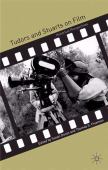
The Tudors & Stuarts on film - ed. Susan Doran & Thomas S Freeman

I mentioned comfort movies at the end of my last post & coincidentally I’ve just finished reading a book about historical movies. The Tudor period is one of my favourite historical periods & I’ve read countless books, both fiction & non-fiction, on it. A couple of my favourite movies, Anne of the Thousand Days & Young Bess are set at the Tudor court. The Tudors & Stuarts on Film is a collection of essays by distinguished historians about the many films set during this period of English history.

I love to read someone’s careful dissection of a movie, picking out all the inaccuracies, why so-and-so couldn’t have been in this scene because they weren’t born until 10 years later. Or how modern attitudes have crept into this movie or the makeup & hairstyles reflect the time the movie was made rather than the period of the action. It’s not all nitpicking though. The writers are as keen to praise as to blame. They recognize when a movie has captured the essence of an episode from history even though the historical accuracy leaves a little to be desired.

I found it interesting to read how the portrayal of Henry VIII has changed according to the latest historical thinking & the expectations of the audience. In the 1933 movie, The Private Life of Henry VIII, Charles Laughton played Henry as Bluff King Hal, striking poses reminiscent of Holbein’s great portrait of the king. But, as well as the tyrant chopping off the heads of wives & courtiers, & the glutton getting fatter by the minute, by the end of his life, he was shown as a henpecked husband & figure of fun. The ultimate end of this idea of Henry was Sid James’s performance in Carry On Henry. The more ruthless as well as the more attractive side of Henry’s personality has been highlighted in recent years with Eric Bana in The Other Boleyn Girl & Jonathan Rhys Meyers in the TV series, The Tudors.

Anne Boleyn has generally been treated sympathetically in the movies. Merle Oberon’s few scenes as the condemned Anne in The Private Life of Henry VIII showed Anne on the eve of her execution, bravely facing her fate. In Anne of the Thousand Days, Genevieve Bujold (seen above with Richard Burton) was an Anne for the 1960s, discussing her sexual experiences with her first love, Henry Percy, & showing a gift for prophecy & a touch of feminist triumph in her final taunting words to Henry, “My Elizabeth shall be a greater queen than any king of yours!”

Carole Levin’s essay on Lady Jane Grey looks at two films, Tudor Rose (1936) with Nova Pilbeam (above) & Lady Jane (1986) with Helena Bonham Carter. Both films concentrated on Jane as a romantic girl, falling in love with her husband, Guildford Dudley, after their arranged marriage & entirely ignoring the religious context of her story & Jane’s strong Protestant faith. The 1986 film showed Jane & Guildford planning great social reforms to help the poor – a reaction to the social conditions of Margaret Thatcher’s Britain? - & romantically spending their last night before their executions together in Jane’s cell in the Tower of London.

The influence a successful movie can have on public perceptions of a historical figure is shown by the play & film of Robert Bolt’s A Man For All Seasons about Sir Thomas More. More is portrayed as the saintly man stricken by his conscience & unable to obey his King, even at the risk of imprisonment & death. This has been the accepted view of More until very recently but historians have tempered the view of the saint & martyr with the view of More as a religious bigot who punished those he saw as heretics severely.

Then there’s Elizabeth. From romantic princess, in love with Tom Seymour in Young Bess (Jean Simmons & Stewart Granger above), to Virgin Queen as icon in Shekhar Kapur’s Elizabeth (1998), Elizabeth has appeared in more films than any other monarch. The essays by Susan Doran, Judith Richards & Christopher Haigh explore the many ways she has been seen by film makers. I wanted to get hold of this book after reading a reference to Ronald Hutton’s essay, Why don’t the Stuarts get filmed? As Hutton explains, the Stuarts have been filmed, of course, but not nearly as much or as successfully as the Tudors & he explores the reasons why. The Stuart century had civil war, the execution of a king, exile, restoration & Glorious Revolution, yet there have been few films about these monarchs. I’ve seen most of the movies discussed & I enjoyed revisiting my memories of them & discovering more about the decisions made by actors, writers & directors when they decide to make a historical film.