I had mixed feelings about this book. It's the story of an English student studying Chinese language & history in Peking in the 1970s, during the final days of Mao's Cultural Revolution. What disconcerted me at first was the tome of humorous incomprehension. I was tempted to pick this up because I'd been reading articles about the 50th anniversary of the beginning of the Cultural Revolution. Everything I read emphasized the horror & the tragedy of this period of Chinese history, when the Communist leadership, led by a resurgent Mao Zedong, incited students to form the Red Guard. The Red Guard violently suppressed intellectuals, exalted the role of the peasants & forced so-called class enemies to work in the fields. In the process this new policy ruined the economy & led to millions of deaths from famine as well as the many people imprisoned by the regime. China was almost an unknown land to most people in the West at that time & Frances Wood didn't know about the atrocities until her return from Peking. The book was based on her letters home & emphasize the absurdities of a regime that she compares to Sellers & Yeatman's 1066 and All That rather than Orwell's 1984.
I can't imagine how Wood kept her sense of humour in the circumstances of her life in Peking. She was one of a group of foreign students studying at a Language Institute & then, she was permitted to study history at Peking University. Living conditions were primitive, no heating in the winter, very little hot water (& that was usually monopolised by the aggressive North Korean students). Washing sheets in the winter & trying to keep the sleeves of a thick padded coat free from soy sauce are only two of the challenges Frances faces. Her Chinese tutors & fellow students lived in a state of fear that their words would be misinterpreted & so real friendships were impossible. Some of the foreign students deliberately tried to question the official version, which changed depending on who was in or out of favour with the leadership of the Party. Teaching materials were bland & uninteresting because so much history was being rewritten & so many books stamped Negative Teaching Material & only available from the library with written permission from a tutor.
Then, there were the compulsory games & the periods spent working in the country, trying to plant rice or bind enormous cabbages with inferior rice straw that broke. Every aspect of life was dictated by the Party & foreigners were restricted in their movements, forced to get permits to travel &, like other Chinese, having to take all their food with them for the journey. There are some beautiful moments, seeing the dawn at the Great Wall, for instance, but most journeys, whether by train or bicycle, were frustrating. The British Embassy staff provided respite for the British students, providing transport for them to get into Peking & inviting them to social events & outings. Wood always feels an outsider & the horrified reaction of most Chinese to Westerners gives her insight into racism at a very basic level,
An immensely tall and lanky Swedish student with a great clump of fair hair got tired of walking along city streets and having the entire population call out Waiguo ren (Foreigner) as if he didn't know. ... The same thing happened to the rest of us, all the time, although we weren't quite so visible from a distance. Wherever we went, whatever we did, there was always the insistent whisper, Waiguo ren. If you just slipped out of the Institute gates to post a letter, people staggered back, arms flailing, or flattened themselves against walls and stared. I remember one little old lady in her thick black cotton padded suit, hobbling along on bound feet, who had to clutch at a tree when I passed as she muttered Waiguo ren to herself.
After a year in Peking, Frances returns home after a long journey on the Trans-Siberian Railway & through Eastern Europe. She regrets her failure to really become a part of China, unrealistic though such an aim might have been. On her return home, she was paralysed by the choice of cereals at breakfast (even though she'd dreamed of such choice in Peking) & felt paranoid when she was ignored by her fellow travellers on the bus. Frances Wood & her fellow students were witnesses to the essential absurdity of all totalitarian regimes. She was fortunate in being an outsider, able to observe & be amused by the ridiculousness without becoming a victim of the arbitrary whims of the leadership. I enjoyed Hand-Grenade Practice in Peking with reservations. Having just read Christabel Bielenberg's memoir, The Past is Myself, I had similar questions about writing & reading memoirs. Although written many years after the event, both authors take us back to the people they were at the time with the knowledge they had then. I can only respect their honesty & their ability to strip away the knowledge they gained after the fact & take their stories at face value, for the fascinating slices of life they are.
Showing posts with label Slightly Foxed editions. Show all posts
Tuesday, September 13, 2016
Thursday, August 25, 2016
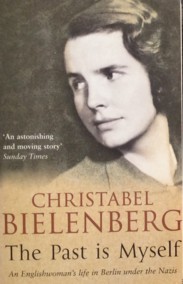
The Past is Myself - Christabel Bielenberg
Christabel & Peter Bielenberg were married in 1934. She was English but she gave up her British citizenship to live in Hamburg with Peter, a would-be lawyer from a liberal family. The Bielenbergs & their friends thought that Hitler was a joke; they couldn't believe that his crude appeal to xenophobia & nationalism could really succeed. However, as time went on, they became more & more distressed by the direction Germany was taking. Peter qualified as a lawyer & joined his father's firm but, when a client who had been acquitted was immediately picked up by the Gestapo & rearrested, he could no longer see any point in practising law.
By the time war broke out in 1939, Peter was working for the Ministry of Economics, eventually spending most of the war managing an aircraft factory in Graudenz. Christabel & their three sons were living in Berlin until the bombing became too intense. They spent most of the war in a village in the Black Forest. Peter's friends including Adam von Trott, one of the group who planned the July 20, 1944 assassination of Hitler. When the plot failed, Peter was caught up in the aftermath, arrested & eventually imprisoned in Ravensbrück Concentration Camp. Chris was able to get an interview with the Gestapo officer in charge of Peter's case & convinced him of Peter's innocence. He was released & went into hiding for the rest of the war to avoid being called back to his Army unit. The book ends with the arrival of Allied troops at the end of the war.
This is a fascinating memoir that shows a different side to the war. I've read many books about the Home Front in England but very few from the German side, let alone by an Englishwoman in Germany. The threat of the Nazis becomes more evident as the years pass. Soon, the Bielenbergs are wary with new people, sounding them out before they can speak freely. Even a joke about Hitler or an unguarded comment can lead to prison. Living under such constant strain must have been wearing. Peter was involved on some level with the German Resistance who opposed Hitler & must have been under surveillance. I found it astonishing that Chris didn't suffer from discrimination because she was English, even as the Allied bombing raids intensified. I can't imagine that a German woman would have avoided internment in England during the war. It may have been due to class. The Bielenbergs were a comfortable middle-class family & when they move to Rohrbach, the villagers do all they can to make Chris & the children feel at home.
Life in Rohrbach goes on much as it always has, apart from the problems of rationing. There's only one Nazi in the village but no-one pays any attention to him. When an American airman is shot down & finds his way to the village, the Mayor rings the nearest town for instructions. When told to lock him up, the only police cell is cleaned, the bed made with fresh linen & an enormous meal offered to the exhausted American. I couldn't help but think of the scene in the movie Mrs Miniver when a German pilot is shot down & spouts Nazi propaganda to the last.
Once Peter is arrested, the pace of the narrative quickens & it reads almost like a thriller. Chris gets permission to see Peter in Ravensbrück & her journey by train (in a compartment with the wife & daughters of the Camp Commandant) & then the long walk around the perimeter of the camp is incredibly tense. Her journey to Berlin to see Lange, the Gestapo officer, & her interrogation, is also full of tension but the anger she feels drives away her nerves. She describes the ruins of the city, meets an old friend who now lives among those ruins, & realises how safe she has been in the country. She is saved from almost certain death when a stranger advises that she leave her train & take the Underground. Later she hears that the train was bombed & many people killed.
On her journey back to Rohrbach, she finds herself alone in a carriage with an SS officer. He tells her of his life in Riga in Latvia &, as his family was persecuted by the Russians, they thought the Germans had come to liberate them. He had Aryan looks so was recruited for the SS & participated in the massacre of Jews in Poland. Once he knows that Chris is not German (she tells him she's Irish) he pours out his story. When Peter is released from prison, he tells Chris what happened to him through one long night. He never speaks of it again. He was extraordinarily lucky to be prevented by his work from being with the conspirators on July 20 & so was able, with Chris's help, to be released. Until the war ends, Peter hides near Rohrbach & the whole village must be aware of what is happening.
Chris wrote The Past is Myself in the 1960s & she was criticized for what some critics felt she left out. She does mention the persecution of the Jews & she shelters a Jewish couple for a couple of nights. However, there's no mention of the Holocaust at all. She acknowledges that she & her family were fortunate. Their life in Rohrbach was comparatively safe, away from the devastating raids of the major cities. The villagers seemed to be sensible, pragmatic people who turned a cynical eye on their government even though they weren't free to express their feelings too openly. Even Peter's involvement with the assassination plot was peripheral & he was lucky to be released. Luck seemed to be with the Bielenbergs at every turn. When faced with these criticisms, Chris said that she wrote the book with the knowledge she had at the time. Like many Germans she found it difficult to believe in the enormity of the camps. The newspapers were censored & she just didn't know, even though she should have been in a position to know as Peter was part of the opposition to the regime. She wrote the book to show another side of Germany to counteract the stereotype of all Germans being Nazis. I think it's valuable to hear stories from all sides & Chris's perspective as an Englishwoman is very revealing. The book is a gripping read & I found it fascinating.
Christabel Bielenberg was on Desert Island Discs in November 1992 & I found it very interesting to listen to this after reading the book. I also have the sequel to The Past is Myself, The Road Ahead, on the tbr shelves which describes life after the war when the Bielenbergs lived in Ireland.
By the time war broke out in 1939, Peter was working for the Ministry of Economics, eventually spending most of the war managing an aircraft factory in Graudenz. Christabel & their three sons were living in Berlin until the bombing became too intense. They spent most of the war in a village in the Black Forest. Peter's friends including Adam von Trott, one of the group who planned the July 20, 1944 assassination of Hitler. When the plot failed, Peter was caught up in the aftermath, arrested & eventually imprisoned in Ravensbrück Concentration Camp. Chris was able to get an interview with the Gestapo officer in charge of Peter's case & convinced him of Peter's innocence. He was released & went into hiding for the rest of the war to avoid being called back to his Army unit. The book ends with the arrival of Allied troops at the end of the war.
This is a fascinating memoir that shows a different side to the war. I've read many books about the Home Front in England but very few from the German side, let alone by an Englishwoman in Germany. The threat of the Nazis becomes more evident as the years pass. Soon, the Bielenbergs are wary with new people, sounding them out before they can speak freely. Even a joke about Hitler or an unguarded comment can lead to prison. Living under such constant strain must have been wearing. Peter was involved on some level with the German Resistance who opposed Hitler & must have been under surveillance. I found it astonishing that Chris didn't suffer from discrimination because she was English, even as the Allied bombing raids intensified. I can't imagine that a German woman would have avoided internment in England during the war. It may have been due to class. The Bielenbergs were a comfortable middle-class family & when they move to Rohrbach, the villagers do all they can to make Chris & the children feel at home.
Life in Rohrbach goes on much as it always has, apart from the problems of rationing. There's only one Nazi in the village but no-one pays any attention to him. When an American airman is shot down & finds his way to the village, the Mayor rings the nearest town for instructions. When told to lock him up, the only police cell is cleaned, the bed made with fresh linen & an enormous meal offered to the exhausted American. I couldn't help but think of the scene in the movie Mrs Miniver when a German pilot is shot down & spouts Nazi propaganda to the last.
Once Peter is arrested, the pace of the narrative quickens & it reads almost like a thriller. Chris gets permission to see Peter in Ravensbrück & her journey by train (in a compartment with the wife & daughters of the Camp Commandant) & then the long walk around the perimeter of the camp is incredibly tense. Her journey to Berlin to see Lange, the Gestapo officer, & her interrogation, is also full of tension but the anger she feels drives away her nerves. She describes the ruins of the city, meets an old friend who now lives among those ruins, & realises how safe she has been in the country. She is saved from almost certain death when a stranger advises that she leave her train & take the Underground. Later she hears that the train was bombed & many people killed.
On her journey back to Rohrbach, she finds herself alone in a carriage with an SS officer. He tells her of his life in Riga in Latvia &, as his family was persecuted by the Russians, they thought the Germans had come to liberate them. He had Aryan looks so was recruited for the SS & participated in the massacre of Jews in Poland. Once he knows that Chris is not German (she tells him she's Irish) he pours out his story. When Peter is released from prison, he tells Chris what happened to him through one long night. He never speaks of it again. He was extraordinarily lucky to be prevented by his work from being with the conspirators on July 20 & so was able, with Chris's help, to be released. Until the war ends, Peter hides near Rohrbach & the whole village must be aware of what is happening.
Chris wrote The Past is Myself in the 1960s & she was criticized for what some critics felt she left out. She does mention the persecution of the Jews & she shelters a Jewish couple for a couple of nights. However, there's no mention of the Holocaust at all. She acknowledges that she & her family were fortunate. Their life in Rohrbach was comparatively safe, away from the devastating raids of the major cities. The villagers seemed to be sensible, pragmatic people who turned a cynical eye on their government even though they weren't free to express their feelings too openly. Even Peter's involvement with the assassination plot was peripheral & he was lucky to be released. Luck seemed to be with the Bielenbergs at every turn. When faced with these criticisms, Chris said that she wrote the book with the knowledge she had at the time. Like many Germans she found it difficult to believe in the enormity of the camps. The newspapers were censored & she just didn't know, even though she should have been in a position to know as Peter was part of the opposition to the regime. She wrote the book to show another side of Germany to counteract the stereotype of all Germans being Nazis. I think it's valuable to hear stories from all sides & Chris's perspective as an Englishwoman is very revealing. The book is a gripping read & I found it fascinating.
Christabel Bielenberg was on Desert Island Discs in November 1992 & I found it very interesting to listen to this after reading the book. I also have the sequel to The Past is Myself, The Road Ahead, on the tbr shelves which describes life after the war when the Bielenbergs lived in Ireland.
Subscribe to:
Posts (Atom)