Showing posts with label clergy. Show all posts

Tuesday, July 5, 2016

Salem Chapel - Margaret Oliphant


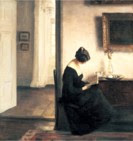
Salem Chapel (photo from here) is a very odd book that begins in Barsetshire & ends up reading like a sensation novel by Wilkie Collins. It's one of the Chronicles of Carlingford, the most popular series of novels written by Margaret Oliphant, a productive & popular 19th century novelist.

Arthur Vincent is a young Dissenting minister, appointed to his first post to Salem Chapel in Carlingford. The Dissenters of Carlingford are mostly tradesmen, very proud of their ability to build a new red brick chapel for their congregation & determined to get their money's worth from the young preacher they've appointed. They are also proud to be distinguished from the Church-going folk on the other side of Grange Lane, in thrall, as they see it, to the Establishment.

As he walked about Carlingford making acquaintance with the place, it occurred to the young man, with a thrill of not ungenerous ambition, that the time might shortly come when Salem Chapel would be all too insignificant for the Nonconformists of this hitherto torpid place. He pictured to himself how, by-and-by, those jealous doors in Grange Lane would fly open at his touch, and how the dormant minds within would awake under his influence. It was a blissful dream to the young pastor.

Arthur Vincent soon discovers that the ideals he held for his future as a minister to his flock collide with his distaste for the position he finds himself in - beholden to men such as Mr Tozer the grocer & Mr Pigeon the poulterer for his livelihood & expected to graciously take their advice. Vincent is also dismayed at being expected to visit his flock to drink tea & make small talk. He also soon realises that he is expected to marry according to the wishes of the congregation (there are dire hints about the unsuitability of a previous minister's wife) & sees that blushing Phoebe Tozer is aiming for the post. Mr Tozer is not shy in setting out the flock's expectations,

"Mr Vincent, sir," said Tozer solemnly, pushing away his empty teacup, and leaning forward over the table on his folded arms, "them ain't the sentiments for a pastor in our connection. That's a style of thing that may do among fine folks, or in the church where there's no freedom; but them as chooses their own pastor, and pays their own pastor, and don't spare no pains to make him comfortable, has a right to expect different.Them ain't the sentiments, sir, for Salem folks. ... and this I know, that a minister as has to please his flock, has got to please his flock whatever happens, and neither me nor no other man can make it different; and that Mrs Vincent, as has seen life, can tell you as well as I can."

All this is very much what I expected from a Carlingford novel. The tone changes when Vincent meets Mrs Hilyard, a mysterious woman living in poverty & sewing for a living. Mrs Hilyard attends the Chapel although she's obviously of a higher social class than most Dissenters. She also receives visits from the beautiful young Dowager, Lady Western, & seems to be on terms of affectionate friendship with her. Vincent is puzzled by Mrs Hilyard & curious to know her story. He's also dazzled by Lady Western & dismays the Chapel goers by accepting an invitation to dinner & appearing to court her notice. Vincent receives letters from his mother in the country telling him about his sister, Susan's, suitor, a man called Fordham.

This is the beginning of the sensation plot which involves impersonation, abduction, attempted bigamy & accusations of murder. Vincent overhears Mrs Hilyard arguing with a man, Colonel Mildmay, about a child that she is desperate to keep from him. When Vincent lets her know that he has heard her conversation, Mrs Hilyard asks that the child, her daughter, be sent to Vincent's mother for safekeeping, little realising that this action will put the girl in danger. The disappearance of Susan Vincent, in company with Mrs Hilyard's daughter, Alice, & Susan's suitor, sparks a chase from one end of England to the other & Vincent's position at Salem Chapel is put at risk by his unconventional behaviour.

I have to say that, much as I enjoyed the book, the two halves really don't mix very well. I wondered whether Mrs Oliphant felt obliged to add the sensational elements because of the success of novels like The Woman in White (Salem Chapel was published in 1863). It was certainly so successful that she was able to ask for a substantial price for her next book. Even for a sensation novel, there are just a few too many coincidences in the plot for me. Arthur Vincent is also a very unsympathetic character. Superior, impatient, ungracious, he ignores the proprieties & the obligations of his position. He becomes obsessed with his pursuit of Lady Western & jealous of those he perceives as his rivals. Even when he becomes a successful preacher, he finds it distasteful that the deacons rate his success based on the number of people who hear him preach & continually remind him that as they have appointed him, they can remove him at any time if he doesn't give satisfaction. He's the son of a minister & must have known that his flock was going to consist of tradespeople so why is he so snobbish about their houses & their daughters & their aspirations?

Salem itself, and the new pulpit, which had a short time ago represented to poor Vincent that tribune from which he was to influence the world, that point of vantage which was all a true man needed for the making of his career, dwindled into a miserable scene of trade before his disenchanted eyes - a preaching shop, where his success was to be measured by the seat-letting, and his soul decanted out into periodical issue under the seal of Tozer & Co. Such, alas! were the indignant thoughts with which, the old Adam rising bitter and strong within him, the young Nonconformist hastened home.

Arthur's mother is another character I could have seen much less of. From the moment when she arrives in Carlingford after Arthur has alarmed her with her doubts about Susan's suitor, she never stops talking & wailing & worrying about the proprieties. I know that a young girl's reputation was a fragile thing but she does lament too much over Susan's "fall" even before she knows what has happened. Almost driven to distraction by the shocking thought that her daughter has deliberately run away with a man, her fears for Arthur's reputation with his flock almost outweigh her fears for Susan's welfare. My favourite character was Mr Tozer, who champions Arthur's cause even when he ignores his very good advice & causes offence wherever he goes. Tozer is proud of the success of Arthur's preaching & not averse to scoring over his fellow deacon, Mr Pigeon, but he does stick by Arthur even when he goes off on wild goose chases on a Sunday & neglects the social side of his job. There's also plenty of humour & satire in the portrayal of the families of the Chapel which was just wonderful. I can't help thinking that it would have been a more successful novel if the sensation subplots had been left out.

The sensation plot winds up very quietly after the amount of lamentation about Susan's reputation, whereabouts & lingering fate that has gone on. Arthur realises that he has to make some fundamental changes to his own life before he can be truly happy &, even then, he manages to go against the advice of everyone who cares for him, contrary to the last.

Anglophilebooks.com There is a copy of the Virago edition of Salem Chapel available at Anglophile Books.

Tuesday, August 12, 2014

Death Comes for the Archbishop - Willa Cather

This is a very quiet, elegiac book that tells an epic story. In 1851, Jean Marie Latour is appointed Apostolic Vicar to the new American state of New Mexico. Latour sets off for his new home & experiences many hardships. He must bring together the European, Mexican & Native American people of the diocese with very little help or guidance. He experiences great hardships, travelling long distances through hostile territory & has to impose his authority on recalcitrant priests. He hears stories of the past & struggles to make sense of the place of the Church in the lives of his most impoverished parishioners. Forty years later, as Latour, now Archbishop, reaches the end of his life, he spends his retirement gardening & training new missionary priests from France in the ways of his parish.

Born in France, Latour has been a parish priest near Lake Ontario since he left the seminary & went to the United States as a missionary, with his great friend, Father Joseph Vaillant. Latour is sent to New Mexico to take charge of a vast diocese that has had no real discipline imposed on it for some time. The original Spanish missionaries who went out to New Mexico were driven out in the early 18th century & the current Bishop of Durango simply ignores the directives sent by his superiors in Rome. Latour & Vaillant reach Santa Fe to discover that no one knows who they are & no one pays them any attention. The documents sent to announce his appointment are at the mercy of a non-existent postal service so Latour decides to go to Old Mexico to visit the Bishop in person.

On this first journey in his new home, Latour becomes lost & is lucky to stumble across a Mexican settlement where he is welcomed & his arrival is seen as the answer to prayer as the villagers have been without the services of a priest for some time. There are marriages to be performed & children to baptize. This first experience shows Father Latour where his efforts must be directed. He sees his deliverance from almost certain death as a sign that he has made the right decision in coming to New Mexico.

Father Latour returns to Santa Fe after meeting the Bishop & receiving his accreditation from him to find that Father Vaillant has already made progress with the priests of the city. The two men are opposites in almost every way but the mission needs all their qualities. Father Vaillant is practical & determined. He has reorganized their house & taken charge of the cooking. While Father Latour worries about the size of the diocese & the many irregularities he has already heard about, Father Vaillant urges him to concentrate on sorting out Santa Fe first. Father Vaillant is often sent out to bring an unruly parish back into the fold & spends his life as a missionary in the farthest reaches of the country. Father Latour impresses by his compassion, his integrity & his devotion to the people he serves. Neither would have been successful without the other. At the end of the novel, Father Vaillant reflects on the differences in the two men,

Wherever he went, he soon made friends that took the place of country and family. But Jean, who was at ease in any society and always the flower of courtesy, could not form new ties. It had always been so. He was like that even as a boy; gracious to everyone, but known to very few.

There are some wonderful stories in the novel. Father Vaillant is short & has trouble riding a horse comfortably. He convinces a wealthy parishioner to give him not one but two mules - one for himself & one for Father Latour. Father Vaillant could not be happy with a comfort that his friend could not share & the mules had been brought up together & so would be miserable apart. It's done with such humour & humility that the parishioner, who was happy to give one mule, decides that he's just as happy to give both his prize animals. Father Vaillant later goes to the goldfields of Colorado to minister to the miners & bring some religious comfort to a lawless place. He has a wagon constructed especially to carry all the things he will need to save souls & spread the Gospel & he & his wagon soon become famous throughout the territory. He would return to New Mexico on what he called begging expeditions but never returned for good.

Another time, the two priests are travelling in unfamiliar territory when they stop to ask shelter from a man whom they instantly dislike. His frightened, downtrodden Mexican wife, at great risk to herself, warns them to leave immediately &, acting on their own instincts, they do so. The woman, Magdalena, escapes in fear of her life & follows the priests back to Santa Fe. She tells them of her husband's cruelty & that he had murdered four travellers & had planned to murder the priests as well.

The journeys taken by the priests show them the vastness of the territory. I loved the descriptions of the wilderness & the landscape. Father Latour is a very self-contained man but he responds to the beauty of the landscape. He respects all his parishioners & treats them all with love & compassion. He is strict in his expectations of his priests, however, & his standards of behaviour are met eventually by the many renegade priests who had exploited the laxity of the previous Bishop's rule.

As I said at the beginning, this is an elegiac book. That may seem odd when there is so much action, so much danger & peril. However, there's a serenity in Willa Cather's writing that I find so attractive. Father Vaillant often said that he had wished for a life of contemplation before he agreed to go out as a missionary but realised that God had other, better plans for him. The strength of the two men's belief & conviction is at the core of the story & it's their confidence that they are on the right path, no matter how difficult or perilous their situation, that is so admirable. They are humble, very attractive personalities & I loved reading about their lives & about a part of the world I knew nothing about. Death Comes for the Archbishop is a beautiful book & I'm looking forward to reading more Willa Cather very soon.

Thursday, August 8, 2013

Selected Letters - Sydney Smith

Sydney Smith was a 19th century clergyman who is probably best known today, if he's known at all, for his letters. He was born in 1771 & educated with his brother at Winchester College (two other brothers went to Eton). He became a clergyman & lived in Edinburgh for some years where he was one of the founders of the Edinburgh Review, an influential periodical on literature, politics & social issues. even after leaving Edinburgh, Smith continued to contribute reviews & articles. He then moved to London, becoming well-known as a preacher & in society. He held the living at Foston-le-Clay in Yorkshire for many years, later moving to a living in Taunton near Bristol & later becoming a canon of St Paul's. He was happily married to Catherine & was a fond father to his daughter, Saba & son, Douglas.

If I was trying to describe Sydney Smith, the words good humoured & liberal come to mind. He had a genius for friendship. He wrote regularly to Francis Jeffreys & John Murray in Edinburgh. When he moved to London, he was introduced by his brother, Robert (known as Bobus), to Lord & Lady Holland, the great Whig political couple, where he become a frequent guest. He kept up a correspondence with both after he moved to Yorkshire. His letters are always respectful but never obsequious or servile. He is honest in his opinions & always interested in their family & friends.

Smith never received the preferments his friends believed him entitled to. He was a liberal Whig in an age of conservative Tory government. Church appointments were a matter of patronage & influence & Smith's friends never had the influence that would have helped him to high office. I don't see him as a particularly ambitious man, though. When he went to Foston, there had been no resident clergyman there for 150 years. He set about rebuilding the vicarage, built up the farm that came with the living & was a much-loved pastor to his parishioners. He was allowed to spend a few weeks away from his parish every year & went to London where he revelled in society & enjoyed the intellectual stimulation that he missed at home. His personality is particularly attractive to modern readers because he espoused many causes that weren't mainstream at the time but have become so. He was anti-slavery, he was in favour of Catholic emancipation & his inclinations were liberal in social matters while always being a devout Anglican.

In later life, he moved to a living near Taunton &, during a brief period of Tory government, he was appointed as a Canon of St Paul's which meant he could spend more time in London.

I think Lord Grey will give me some preferment if he stays in long enough; but the Upper Parsons live vindictively, and evince their aversion to a Whigg ministry by an improved health. The Bishop of Ely has the rancor to recover after three paralytic strokes, and the Dean of Lichfield to be vigorous at 82 -  and yet these are the men who are called Christians. Letter to J A Murray January 24th 1831

His father & brother died, leaving him enough money to live comfortably. Apart from the usual ills of old age, & the death of his son, Douglas, in 1829, he was a contented man by the end of his life.

The best way to demonstrate Sydney Smith's personality, though, is not to try to describe him but to quote his letters. This description of himself in 1805 held true throughout his life,

You ask me about my prospects. I think I shall long remain as I am. I have no powerful friends. I belong to no party, I do not cant, I abuse canting everywhere, I am not conciliating, and I have not talents enough to force my way without these laudable and illaudable auxiliaries. This is as true a picture of my situation as I can give you. In the mean time I lead not an unhappy life, much otherwise, and am thankful for my share of good. Letter to Francis Jeffrey July 4th 1805

Here he advises a friend how to improve her low spirits. I can only agree with all 20 of his precepts but here are just a few,

1st. Live as well as you dare. 3rd. Amusing books. 6th. See as much as you can of those friends who respect and like you. 8th. Make no secret of low spirits to your friends, but talk of them freely - they are always worse for dignified concealment.12th. Avoid poetry, dramatic representations (except comedy), music, serious novels, melancholy sentimental people, and everything likely to excite feeling or emotion not likely to end in active benevolence. 15th. make the room where you commonly sit, gay and pleasant. 17th. Don't be too severe upon yourself, or underrate yourself, but do yourself justice. Letter to Lady Georgiana Morpeth February 16th 1820

He was popular in literary as well as political circles.

Dear Moore,
I have a breakfast of philosophers tomorrow at ten punctually. Muffins and metaphysics; crumpets and contradiction. Will you come?
Letter to Thomas Moore November 12th 1841

My dear Dickens,
I accept your obliging invitation conditionally. If I am invited by any man of greater genius than yourself, or one by whose works I have been more completely interested, I will repudiate you and dine with the more splendid phenomenon of the two.
Ever yours sincerely,
Sydney Smith     Letter to Charles Dickens May 14th 1842

However, my favourite quote comes from his Memoirs,

Thank God for tea! What would the world do without tea? How did it exist? I am glad I was not born before tea.

Tuesday, January 8, 2013

Sidney Chambers and the Shadow of Death - James Runcie

This book almost made it on to my list of Books I Didn't Quite Get To in 2012. I was very excited when I read about it pre-publication. I ordered it for the library & reserved it. Then, it arrived & I looked forward to reading it. Then, I read a couple of lukewarm reviews & I dithered. I took it back to the library, borrowed it again, kept it much too long, returned it then finally borrowed it again & told myself sternly to at least read the first chapter & either finish the book or return it for good. So, I sat down last week & read the first chapter - and read on.

Sidney Chambers is a young clergyman living in a Cambridgeshire village. He divides his time between his parish duties & his appointment as a tutor at Corpus Christi, his old college although we see little of him at Cambridge in this book. The stories in The Shadow of Death follow the seasons of nature & the Church from autumn through Advent, Christmas, Lent & summer. The crimes include a murder made to look like suicide, the suspected mercy killing of an old lady, the theft of a Holbein portrait of Anne Boleyn & the murder of a man during a performance of Shakespeare's Julius Caesar. Sidney becomes involved in these cases reluctantly but once involved, he feels compelled to ask questions & he uses his position as a clergyman to gain the confidence of the people involved. He's encouraged, if not bullied into investigating by his friend, Inspector Keating & his sister, Jennifer, among others. Sidney is rather an ambivalent man. We don't get much insight into his real feelings. He seems swept along by events much of the time, doubting his abilities as a clergyman, unable to assert himself with his housekeeper & unsure of his feelings for two women - rich, beautiful Amanda Kendall who would be a disaster as a clergy wife & quietly attractive widow, Hildegard Staunton.

I read The Shadow of Death in a couple of days but didn't find it completely satisfying. I think that I was put off by the feeling that the author had planned the series (there are going to be six books taking Sidney from the 1950s to the early 1980s) rather cold-bloodedly. He's chosen all the elements that appeal to readers of cosy English mysteries. A clergyman (reminiscent of Father Brown & the Trollopes - Anthony & Angela) living in a Cambridge village & in Grantchester of all villages with its Rupert Brooke associations. There are numerous references to events & the attributes of austerity Britain in the 50s (the housekeeper's dreadful food, the Coronation, jazz clubs) that feel rather self-conscious. The crimes are neat, not too violent or if it's murder, then it takes place off stage. Sidney's friendship with a policeman gives him the entree, sometimes surprisingly, to various crimes & their regular Thursday evening games of backgammon in the pub are cosily nostalgic of a time when pubs were for playing backgammon or darts & drinking warm beer. He even has a black labrador called Dickens.

This book reminds me of all the reasons why I prefer to read books written in the early to mid 20th century rather than novels written now that are set in an earlier time with their product placement (the housekeeper leaves a note asking for more Vim & Harpic) & mention of current events that would have been taken for granted in a book of the period. The second book in the series, Sidney Chambers and the Perils of the Night, is to be published in May & I'm not sure if I'll read it. If I do, it will be because I've been seduced again by the gorgeous cover art & maybe because I'm curious to see if Sidney settles into his life & his role as unofficial sleuth.

Tuesday, November 22, 2011

Clerical Errors - D M Greenwood

I love a good clerical crime. D M Greenwood was one of my favourite mystery writers back in the 90s & I'm really pleased that Ostara Publishing have begun reprinting her novels featuring Theodora Braithwaite as a deaconess whose common sense & intelligence is much needed in the backbiting murderous corridors of Anglican Church. Clerical Errors is the first book in the series & introduces Theodora, tall, calm, kind & a woman who sees the foibles & problems in the Church while still devoting her life to it.

Julia Smith, a young woman at a loose end & looking for a role in life, arrives for a job interview at the diocesan office of St Manicus. She's bewildered by the Church hierarchy & unsure that her meagre typing skills are up to the job but she is offered the post by Canon Wheeler. As she recovers from the interview in the Cathedral, she is startled to hear a woman screaming. When she goes to investigate, she discovers a man's head in the font.

This is not a good start to Julia's working life but she is taken under the wing of Theodora, who works in the diocesan office & Ian Caretaker, an administrator in the office. Julia soon realises that Canon Wheeler is a bully, a man of obscure origins using the power of his position, & the absolute loyalty of his secretary, Rosamund Coldharbour, to intimidate more timid souls. He also takes advantage of the frailty of the current Bishop & obviously has his eye on his next step up the diocesan ladder. The dead man is Paul Gray, a young priest from a local parish. There was a little mystery & some murky scandal in his past but there seems to be no real motive for his murder & in such a horrible way. Was the placing of his head in the font a message to another member of clergy or to the Church?

Theodora & Ian begin investigating the murder but are they becoming sidetracked by other strange events such as the discovery of some of the Cathedral candles being used in what looks like a Satanic rite? The police are being thwarted by the closed shop mentality of the clergy & Canon Wheeler enjoys wrong footing them at every turn. Ian's contempt for Canon Wheeler is obvious & the Canon is determined to get rid of him. Ian's talent as an administrator would make it hard for him to be dismissed but is there something in his past that could trip him up? Then, a second murder takes place & the secrets of everyone caught up in the case are uncovered.

I like Theodora as a character very much. I found this first book a little frustrating as there wasn't really enough of Theodora & much more of Julia Smith who, apart from discovering the bodies & being a convenient audience for Theo & Ian's speculations, doesn't really have much to do except follow them around. I know we see much more of Theo in the later books as I read them all when they were first published & I'd like to read them all again. Theo is in the tradition of the great loner detectives, partly because of her job & vocation but also because she's an observer. This, & her compassion, is what makes her such an engaging character. She is a little on the sidelines, watching everything & everyone but keeping her own counsel. Her knowledge of the personalities involved here is what leads her to the murderer. The Cathedral setting is also beautifully evoked, not surprising really as D M Greenwood was the Director of Education for the diocese of Rochester until her retirement in 2004. She wrote nine novels in the series in the 1990s. I've always loved a good clerical mystery. Kate Charles is another favourite & I enjoyed the beginning of a new series,  The Reluctant Detective by Martha Ockley last year. I hope both these authors publish new books soon. Until then, I may have to invest in some more D M Greenwood.

Tuesday, December 21, 2010

The Reluctant Detective - Martha Ockley

I love a good clerical mystery & I’ve found a new author to follow. The Reluctant Detective is the first book in a new series by Martha Ockley, a new author to me. This book is in the tradition of my favourite clerical mystery authors, Kate Charles & D M Greenwood with a touch of Dorothy L Sayers & Agatha Christie.

Faith Morgan is a woman in her 30s, recently ordained after a career in the police force that became unsatisfying once she felt a vocation for the Church. As well as a career, Faith also left behind a serious relationship with Detective Inspector Ben Shorter. Faith has been working in an inner-city parish but is interested in moving to a rural parish. Little Worthy is a quiet village near Winchester. Faith knows the village from childhood holidays & is feeling a little nostalgic as she arrives on a Sunday morning just before the service begins. Her hopes of remaining anonymous are immediately dashed by the beady eyes of churchwarden, Pat Montesque, who catches the glint of her cross on the collar of her dress & moves in to find out everything about Faith in ten minutes or less. The incumbent, Alistair Ingram, is about to retire because of ill-health & the parish of St James’s would be a new challenge for Faith.

Faith’s nostalgic pleasure in the church is shattered when Alistair Ingram collapses & dies during Communion. Her police training takes over as she rushes to offer help but she soon realises that this may not be a simple death from a heart attack but something more sinister. Her instincts are correct. Ingram was poisoned. She’s disconcerted but not surprised when Ben Shorter arrives to head the investigation team. Their relationship foundered on his inability to understand her vocation & also his involvement in another case that went wrong. The details of this case are unclear but Ben obviously disappointed Faith in his handling of a vulnerable suspect & their relationship never recovered.

Faith is asked to fill in as Vicar of St James’s until a new incumbent is appointed & she finds herself becoming more & more involved with the parish & her new parishioners. She can’t stop herself doing a little investigating. Could the answer lie in Ingram’s past life as a financial consultant? In his spiky relationship with his son, Don? In his relationship with a divorced parishioner? Or was the dispute with a neighbouring farmer over a piece of land enough to push the farmer, a troubled loner, over the edge? There are lots of motives & suspects to mull over, maybe too many, & I picked up enough clues to work out the murderer, but it didn’t matter. I loved this book. I read it in an afternoon. I loved the atmosphere of the rural parish, the characters of the other clergy, including a particularly unpleasant press officer & Faith’s mentor, Canon Jonathan, who makes a brief appearance.

Faith herself is a character I’m looking forward to meeting again. She's still finding her way in her new life but she has a genuine desire to make a difference & be a spiritual guide to her parishioners. Her relationship with Ben is still smouldering & it will be interesting to see where Ockley takes them in the next book in the series. Martha Ockley is the pen name of Rebecca Jenkins who has a website here. She has written a series of Regency mysteries as well as non-fiction. It’s no wonder that the clerical atmosphere & politics are spot-on as she’s the daughter of the Rt Revd David Jenkins, former Bishop of Durham.

Saturday, June 26, 2010

Murder at the flood - Mabel Esther Allan


Murder at the Flood is a terrifically atmospheric murder mystery set in Norfolk in the 1950s. It’s been reprinted by the wonderful Greyladies. I love the quote on their homepage, “Quirky, witty, intelligent, unexpected. Well-mannered books by ladies long gone.” I’ve read 2 of their titles & have another half-dozen on the tbr shelves & I agree with them so far! The author of Murder at the Flood, Mabel Esther Allan, was a children’s author & this was her only published adult book. I wish she’d kept writing mysteries as I loved this & read it very quickly.

Emily Varney is the young wife of the vicar of Marshton, a village on the Norfolk fens. She’s also the detective novelist, A E Sebastian, but she has so far kept this a secret as she doesn’t think the villagers would take too kindly to the vicar’s wife working, even as a novelist. The book opens on a windy, stormy day. Emily feels unsettled by the weather & uneasy about the mysterious letter her husband, Richard, received that morning. Richard has a secret but he hasn’t confided in Emily. Emily also has a secret as she’s being blackmailed by the obnoxious Thomas Long, the local garage owner, who has discovered her other life as A E Sebastian. Long is a violent drunk, cruel to his wife & his daughter, Betony. Soon, Emily’s own problems are overtaken by the news that the river banks have flooded & a stream of villagers & local people start arriving at the higher ground of the church & vicarage looking for refuge. At the same time, Thomas Long is found murdered in the churchyard. Not only Emily & Richard seem to have had a motive for killing Long as he was blackmailing many other people, including local author, Mr Abel-Otty, a man with an eye for a pretty face & Caroline High, the young schoolteacher recently returned to the village.

As the villagers cram into the church, & the village is cut off by flood waters, pompous Mr Pike (who fancies himself as a detective) & sensible Colonel Pashley, decide to investigate Long’s murder while they wait for the police to arrive. Unfortunately, Mr Pike antagonises everyone with his insinuations & insensitive questioning & the rumours become more outrageous. Several people with a motive for killing Long, including his own wife & daughter, were near the churchyard at the critical time but it’s when the rumourmongers decide that Richard is the murderer that Emily is stung into action. She decides that her talents as a detective novelist will help her to find the truth but not before many secrets are revealed & another murder is committed.

The flood adds a feeling of claustrophobia to this story. The realistic details of the struggle to clothe & feed all the refugees adds to the terror Emily feels when she fears that Richard will be forever tainted by the rumours if the true murderer isn’t discovered. The villagers are a realistically drawn group of people, most of them frightened by the flood, worried about their houses & possessions & revelling in spreading nasty rumours to take their minds off their troubles. Murder at the Flood is a great read that I’d recommend to anyone who enjoys a Golden Age mystery.

The setting reminded me very much of one of my favourite movies, Thunder on the Hill, made in 1951. This is also set during a flood on the Norfolk fens at a convent hospital high on a hill. A young woman played by Ann Blyth is being taken to Norwich to be hanged for the murder of her invalid brother when the flood forces her & her escort to take refuge at the convent. Sister Mary Bonaventure (Claudette Colbert) decides the woman isn’t guilty & sets out to reinvestigate the crime. Gladys Cooper, one of my favourite actresses, plays a splendidly regal Reverend Mother. Beautifully shot in black & white, it was directed by Douglas Sirk who’s probably better known for his melodramas like Magnificent Obsession. It’s been raining here since yesterday morning so I may dig out my old video & watch it again this afternoon. It’s perfect weather for watching a rainy movie. Golden Age mystery movie lovers might enjoy Thunder on the Hill.