Showing posts with label O Douglas. Show all posts

Tuesday, March 25, 2014

Jeeves & Anna

I've just had a couple of weeks leave & I've had a lovely time pottering in the garden & the house & reading quite a lot. These are a couple of the books I've read over the past fortnight.

I've never been a fan of prequels, sequels, missing chapters etc of my favourite novels. I'd rather just reread the originals & in the case of P G Wodehouse, I still have many books to read before I run out. So, I thought I'd give Sebastian Faulks' new novel, which he calls a homage to Wodehouse, a miss. However, my friend Barbara, who blogs at Milady's Boudoir (now there's a Wodehouse reference), recommended it so I thought I should give it a go. I'm so glad I did because it's terrific. I read it in two sittings & laughed out loud more than once. With Wodehouse (or a homage), that counts as a successful reading experience.

Bertie Wooster has been on holidays on the Côte d’Azur where he meets Georgiana Meadowes, the ward of Sir Henry Hackwood. Even though Bertie is known for getting involved in dubious engagements, he is really very taken with Georgiana but thinks she is far above his reach. She's also engaged to Rupert Venables, a young man with the money to dig Sir Henry out of a financial hole & allow him to stay at his family home, Melbury Hall. Back in London, Bertie's old friend Woody Beecham comes to him with a dilemma. He wants to marry Amelia Hackwood, daughter of Sir Henry, but has no money & so Sir Henry isn't keen. Either Amelia or Georgiana must marry money to save Melbury Hall.

Amelia has broken off her engagement with Woody because she says he was flirting with some girls from the village while Woody says he was just being polite. Woody asks for advice from Jeeves & an ingenious plan is put in train. Jeeves & Bertie decide to help Woody by being on the spot near Melbury Hall to offer advice. The plan also saves Bertie from the perils of a visit from his Aunt Agatha who has invited herself to stay. Being so close to Georgiana is another incentive. Unfortunately the plan is derailed by circumstances which mean that Jeeves ends up impersonating Lord Etringham, an elderly peer, & Bertie masquerades as his manservant, Wilberforce. The complications multiply &, although Bertie isn't at all sure about his vocation as a servant, Jeeves seems to be enjoying his new role a little too much.

Sebastian Faulks has written a beautifully judged novel that reproduces all the familiar tropes without becoming a caricature. He makes it seem effortless which is the point of Wodehouse. The great set pieces of the village cricket match & the dinner party where Bertie tips a bowl of gooseberry fool into the lap of Dame Judith Puxley are funny & heart-stopping at the same time. I don't think any fan of Wodehouse could possibly be offended by this good-natured & affectionate tribute.

The category I think of as Nice Books has almost totally disappeared, although fortunately there are still some nice books. It is difficult to say just what qualifies a novel for it. The absence of gross language is, of course, essential, as is the absence of sexual impropriety, at least on the part of the hero and heroine. Perhaps the most noticeable feature of a Nice Book is, even when accompanied by sad or unpleasant events, a feeling of geniality and happiness. It also requires a feeling of geniality and happiness.

Wendy Forrester is describing Olivia in India, the first novel by O Douglas, but she could be describing any of O Douglas's novels. Wendy Forrester's biography of the author shows just how closely the life & the novels were connected.

O Douglas was the pen name of Anna Buchan, sister of John Buchan, author of many novels & Govenor-General of Canada. Anna chose her pen name for her novels of domestic life because she didn't want to be seen to be cashing in on her brother's fame. All her novels are similar in theme & setting. Apart from Olivia in India they are all set primarily in Scotland. There's also a certain amount of autobiography in the novels. There's often a small boy based on Alistair, Anna's younger brother who was killed in WWI. Priorsford, where several novels are set, was based on Peebles, where Anna lived with her brother, Walter.  

The Setons, which I read recently, seems to be the most autobiographical novel she wrote. The manse family living in Glasgow, the move to the country when the father retires, the young brother, Duff, based on Alistair Buchan, the impact of WWI on the family. The only difference is the absence of Mrs Buchan. In the novel, Elizabeth's mother has died before the novel begins. Maybe this was because Anna, Walter & their mother lived together for over 20 years after Mr Buchan's death & Anna was wary of putting a recognisable portrait of her mother into her fiction. Forrester does see echoes of Mrs Buchan in other novels such as Mrs Laidlaw in Eliza For Common with her pride in being able to furnish a manse for her husband. One novel, Ann and her Mother, is about a woman writing a biography of her mother. It seems that Anna was writing a biography of Mrs Buchan in this novel.

Anna Buchan lived a quiet life. She wrote her novels, kept house for her brother, was involved in local activities & took some pride in the success of her books with readers & critics. This review in the Times Literary Supplement is a little condescending, it nevertheless sums up the appeal of O Douglas's novels.

Penny Plain is a very able and delightful book, but it is not the kind of book that the Marxian kind of person would like. Nor does the author like the Marxian kind of person. the author is not ashamed of taking pleasure in homeliness ... If we hold that the creator is entitled to deal with anything which exists, then he (or she) is entitled to talk about lamplit cheerfulness just as much as about passion and agony. The result, in this case, is certainly very pleasant.

Anna Buchan and O Douglas is a slight book of only 120pp. Wendy Forrester tells the story of the author's life simply & with sympathy & affection, both for the author herself & her books. This is a lovely companion volume to the novels & I'm looking forward to reading more of them in the future.

Thursday, February 27, 2014

The Setons - O Douglas

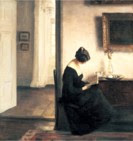
Reading serendipity is a wonderful thing. I was halfway through reading The Setons by O Douglas (photo from here) when, into my inbox, popped a review of the book by heavenali. I hadn't realised that The Setons was one of the titles selected for the Librarything Great War theme read so there are probably quite a few bloggers reading it at the moment. Ali has written a lovely review which really says everything I wanted to say myself so I feel a little redundant. So, I'll just give a brief description of the plot & a few thoughts on the attractions of O Douglas's books for me.

The Setons are a manse family, living in Glasgow in 1913. James Seton is a well-loved minister to his congregation, a little remote but always practical & kind when help is needed. He's a widower & his daughter, Elizabeth, keeps house for him & his youngest son, David, known as Buff. Elizabeth has largely taken the place of her mother in the house & in the parish. She is attractive, kind, opinionated, funny & devoted to her father. There are two older brothers in India, Alan & Walter. The eldest son, Sandy, died while at Oxford & his mother followed him soon after. We meet Elizabeth's friends, the Thomsons & Kirsty Christie, also a daughter of the manse but less attractive than Elizabeth in looks or manners & less satisfied with her lot in life.

When Aunt Alice proposes that her husband's nephew, Arthur Townshend, should visit Glasgow, Elizabeth is dismayed by the prospect. She has missed meeting Arthur on the visits she made to her aunt & the picture she has of him is not an appealing one. She imagines him as very English, stuffy, self-important, used to the best of everything & likely to look down his nose at Glasgow & their family. Luckily, Arthur turns out to be a delightful man, interested in everything & everyone. He makes an immediate friend of Buff & is fascinated by manse life. He quickly becomes a close friend to Elizabeth &, by the time he leaves, their relationship has deepened into love, although unacknowledged. 

The story takes a serious turn in the final chapters as we reach 1914 & the outbreak of WWI. The Setons was published in 1917 so the outcome of the war was still unknown & this is evident in the apprehensive tone of the narrator. James Seton develops heart trouble & has to leave the ministry. The family moves to Etterick, their house in the country & they all adjust to a very different life. The book is very much of its time in the descriptions of young men going joyously to war in defence of their country. The constant fear & worry felt by those at home about loved ones serving in the war is beautifully described. These final chapters are very poignant & there is hope as well as sorrow as the book ends.

O Douglas was the sister of John Buchan. Her novels are all on similar themes - domestic stories about family & relationships with a lot of humour & always some gentle romance. Buff is another of the young boys who feature in all her novels & are based on a young brother who was killed in the war. Her books are comforting but not saccharine, always alive to the realities of life. O Douglas had very strong views on right & wrong, duty & responsibility & this is reflected in all her books as well as a melancholy that I find attractive. I love reading about a time & a place that seems so far away from our busy modern world yet is still recognisable, with characters who face the problems that everyone has to deal with, no matter where they live or at what time.

Saturday, September 1, 2012

Eliza for Common - O Douglas

O Douglas wrote about what she knew. Eliza for Common is one of the best examples of this because the Laidlaw family, living in Glasgow just after WWI, is very close to the Buchan family.The Laidlaws are a family of the Manse, not rich but happy together & sure of their place in local society. As the book begins, Jim, the eldest son, is anxiously waiting to hear whether he has won a scholarship to Oxford. Eliza, the only daughter, is very close to Jim & is just as anxious as he is about his chances. The two younger boys, Geordie & Rob, are still at school & always in mischief. Eliza feels stifled by her life, restricted to helping her mother with housework & paying calls.She's at an age where she thinks she'll miss out on life if she doesn't grab it right now. She's rather be called Lisa as she thinks Eliza a dreary name, but only Jim tries to remember.

Jim wins his scholarship & goes up to Oxford. He's always been a writer & soon begins to have his stories placed in magazines which helps him pay his way at college. He plans to write a play, which upsets his parents as they don't approve of the theatre. When he comes home after his first term with an Oxford accent, Rob & Geordie think it's hilarious but Jim hasn't changed in essentials. He's determined that Eliza won't be left behind even though there's never any suggestion of a university education for her. Jim organizes trips to Oxford & London for Eliza & their mother & memorably takes Eliza on holiday to Switzerland.

Eliza for Common is a very domestic novel. The dramas of the story are domestic ones. Mrs Laidlaw, always an indefatigable worker, falls ill with a nervous complaint & completely gives way. The neighbours are kind & intelligent like Mrs Learmond or irritating & silly like Mr & Mrs Stit. Mrs Service, a minister's widow, who visits the Laidlaws every Friday & is part of the family. Jim's friends from Oxford, Ewan Cameron & Gerald Meade, visit the family at the farmhouse where they spend their summers, glorious summers of freedom & no responsibility.

As always, the characterization is excellent. O Douglas depicts her characters so economically but just a few touches can describe a whole life. Mrs Service movingly describes her joy at being able to marry at last when she & her husband were both in their 40s after she'd spent years looking after her parents. They only had 12 years together but, for Mrs Service, that was enough to be grateful for. Mrs Stit's main pleasure in life is boasting that her three daughters have all married ministers so she has three Manses to visit. Eliza isn't a model daughter. She's prickly & resentful when she'd rather be reading than helping her mother turn out a chest of drawers but she gladly takes on the running of the household when her mother is ill. Although as she says to Jimmie, "Who else is there?", which is true enough. The family relationships are also realistic rather than sentimental. Eliza's fury at her brothers' calling her Elijah & her fury at having to hold her tongue as an elderly uncle talks nonsense, are very true to life.

I enjoyed the picture of family life after the War. It didn't feel as though the book was set in a big city, it could have been in a village. The Manse & its social circle encompassed everything except when Eliza managed to escape & experience life beyond the Manse. I enjoyed meeting the Laidlaws very much. As always, O Douglas's small boys are delightful & very funny. Mr Laidlaw is kind & unambitious which infuriates his wife even though she has long ago given up hopes of seeing her husband as Moderator & herself walking into Church in a velvet coat. Eliza for Common is a gentle book about an engaging family. Greyladies have just published another of O Douglas's novels, The Day of Small Things, & I'm looking forward to read it as it's a sequel to The Proper Place which I read a couple of years ago.

Friday, July 20, 2012

Bookish news - & some treats to look forward to

I mentioned in my last post that I love publishers who reprint out of print classics that have slipped under the radar for whatever reason. Now with e-books, it's even easier for a canny publisher to bring back an author's backlist without the thought of being left with a warehouse full of unsold hard copies. I discovered Martin Edwards through his wonderful Lake District series. He also wrote an earlier series featuring Liverpool lawyer Harry Devlin but most of the titles have been out of print for some time. I borrowed Waterloo Sunset from work & enjoyed it very much & Arcturus Classics have recently reprinted the first in the series, All the Lonely People. Now, Andrews UK have reprinted most of the rest of the series as POD paperbacks & e-books. Distinguished crime writers have contributed new Introductions & Martin has written a "Making Of" feature for each title & there's a teaser chapter of the next book in the series. All the details are here at Martin's blog.

Martin's blog also reminded me of Bello, Pan Macmillan's new e-book imprint. They have some fantastic authors, including Josephine Bell, a mystery novelist I read in the dim dark past but would love to read more of her books. She also wrote historical novels which are part of the new Bello list as well. Other authors include Vita Sackville-West, Eva Ibbotson, R C Sherriff (author of the terrific Persephone reprint, The Hopkins Manuscript), Francis Durbridge & Lillian Beckwith. I'm especially interested in the Lillian Beckwith books as I love stories set in Scotland & her memoirs & novels set in the Hebrides have been out of print for some time.

I'm reading Susanna Kearsley's novel The Shadowy Horses at the moment. I read all her books as they were published but this was an especial favourite & I recently read a rave review (I can't remember where now) that made me long to read it again. It's just as good as I remember & looking at Fantastic Fiction to find out when it was published (easier than going back in my e-book), I discovered that Susanna has a new book due out next March called The Firebird. Tantalisingly that's all I can find out about it. There's no blurb on Amazon & nothing on Susanna's website.

O Douglas is another of my recent favourites, discovered thanks to Greyladies in Edinburgh. They're publishing two new books next month & one of them is by O Douglas, The Day of Small Things. I think it's a sequel to The Proper Place which I enjoyed & reviewed here.

Finally, two books that I've pre-ordered & can't wait to get my hands on. Michael Slater's biography of Charles Dickens was published a few years ago & I loved it. Now, he's written a book (published in September) about Dickens's relationship with Nelly Ternan, The Great Charles Dickens Scandal. He not only describes the relationship between Dickens & Nelly & the lengths Dickens went to to keep it a secret but also discusses how the relationship was finally revealed & the many intrigues that accompanied each revelation.

Maggie Lane has been writing about Jane Austen for many years & her thoughts are always insightful & beautifully expressed. Her new book (published in October), Understanding Austen, was the result of a series of articles she wrote for Jane Austen's Regency World magazine. The articles explored some of Austen's favourite words which express her ideas about human worth - elegance, openness, fortitude. It's sure to send me back to reread at least one of the novels.

Well, I can never say I have nothing to read & nothing to look forward to!

Friday, December 30, 2011

Top Ten Books of 2011 - Fiction


My Top 10 Fiction books for the year range from 19th century sensation fiction to 20th century adventure & romance. There's no crime in there & I haven't read many crime novels at all this year. I haven't read much contemporary fiction at all &, as a result, there's very little that's new or modern in my Top 10. I also read most of these books on my e-reader but I don't think that means much except that my e-reader has allowed me to get hold of titles that were previously unavailable. Again, the titles are in no particular order & you can read my original reviews by clicking on the links.

The First Violin by Jessie Fothergill was a book I downloaded from Girlebooks after reading about the author in one of my Top 10 Non Fiction books of the year, Notable Women Authors of the Day. This is the story of a young woman who goes to Germany to study music & falls in love with a mysterious man who plays first violin in the orchestra. It also has a very sympathetic portrayal of a married woman in love with another man.

Another treat from Girlebooks was The War Workers by E M Delafield. The story of a group of women working in a supply depot in England during WWI. It was based on the author's own experiences & is very different to her popular Provincial Lady books.

I'm going to pop a whole series in here even though I've only read the first three books. The Julia Probyn series by Ann Bridge has been my find of the year. Thanks to blog reviews & the wonderful Bloomsbury Reader, I've been able to get hold of the whole series & will be working my way through them all. I've read A Lighthearted Quest, The Portuguese Escape & The Numbered Account so far. Adventure in exotic locations sums up the series. Julia is a delightful character - attractive, clever & determined, she gets to the bottom of any mystery.

Still Missing by Beth Gutcheon was another unputdownable book. I almost stopped breathing at one point. If I hadn't had to get up for work, I think I would have read this in one sitting. The story of an abducted child & his mother's determination to find him, this seemed an unlikely choice for Persephone. But, the experiences of Susan Selky, her reactions to the investigation & her friends & family are universal so it doesn't really matter when the book was written.

Linda Gillard's foray into self-published e-books has been one of my favourite success stories of the year. House of Silence & Untying the Knot are both compelling reads but I think House of Silence was my favourite of the two. As Linda describes it, Cold Comfort Farm meets Rebecca. Family secrets, a beautiful house in the country & a passionate love story, what more could you want?

Anne Hereford by Mrs Henry Wood was my sensation novel of the year. I read it with my 19th century book group & was supposed to stick to seven chapters a week. Well, that was never going to happen once I started! An orphan forced to earn her own living, a mysterious house & its occupants, a vengeful man & a mysterious wing of the house where Anne is excluded, all the ingredients of classic sensation.

Cousin Bette by Honore de Balzac was a novel of revenge, greed & lust & I loved every minute of it. A downtrodden poor relation gets her revenge on her family when she loses the only man she cares about. The downfall of the Hulots is inevitable but even Bette doesn't have it all her own way.

Parnassus on Wheels by Christopher Morley is a book-lover's delight. The story of a travelling bookshop & the man who owns it shows what can happen when a passion for books takes over your life.

Garthowen by Allen Raine was another 19th century book group choice & it was a delightful surprise. The story of a farming family in Wales, of two brothers in love with the same woman & the different paths they take in life was absorbing & there was an element of the supernatural that made the story different to anything else I've read.

O Douglas was the pseudonym of the sister of John Buchan & I've read several of her novels since discovering her through Greyladies. Penny Plain is the story of a family & the efforts of the eldest sister to keep the family together. Jean Jardine, her family & friends in Priorsford show what life was like in a small Scottish town just after WWI. I called the book charmingly comfortable & it is, perfect comfort reading with humour & romance.

Tomorrow, for something completely different, a list of books that I'm sure would have made my Top 10 - if I'd had time to read them.

Tuesday, July 26, 2011

Penny Plain - O Douglas

I discovered O Douglas through Greyladies, the Edinburgh publishing firm that specializes in early 20th century fiction. So far, they've published Pink Sugar, Eliza for Common & The Proper Place & I hope they continue to reprint her books. While hunting around for more O Douglas, I discovered that several more of her novels were available from Project Gutenberg to download free for my e-reader. Among them was Penny Plain. Then, a couple of weeks ago, I was reading Penny's blog, Scottish Vegan Homemaker (lovely blog by the way. Books, cats & delicious vegan recipes) & she showed off her collection of O Douglas novels & mentioned that she was reading Penny Plain for the umpteenth time. That was all the encouragement I needed to decide to read Penny Plain next.

O Douglas was the pseudonym of Anna Buchan, sister of the more famous John, author of The 39 Steps & many other adventure novels. I would describe her books as charmingly comfortable & I mean that as the highest praise. Her characters are charming, her stories are full of human interest, there's always a lovely romance & there's a lot of humour too, mostly through one of her small boys. Poignantly I learned from Penny's blog that the small boys in her books (in Penny Plain it's Gervase Taunton, known as the Mhor) were all based on her own young brother who was killed in WWI.  

Penny Plain is the story of the Jardines. Jean is 23 & has had the care of her two younger brothers & an adopted brother, the Mhor, since the death of dourly religious Great Aunt Alison who brought them up in Priorsford, a small town on the Tweed based on Peebles. David is about to go to Oxford & Jean has been scrimping & saving to make this happen. The family live frugally at The Rigs, a quaint, inconvenient house in the older part of town. Pamela Reston, a 40ish society beauty, arrives to stay in Priorsford while she considers her future. She's had a proposal of marriage from a wealthy politician but isn't sure what she wants to do. She soon makes the acquaintance of the Jardines & finds herself caught up in the life of the town. Pamela's brother Biddy, Lord Bidsborough, is an adventurer & explorer & she describes Priorsford life in her letters to him. When he finally arrives for a visit, he's attracted to Jean although she can't see past his wealth & her poverty & responsibility for her brothers. Lewis Elliott, a cousin of the Jardines, is also an old friend & sweetheart of Pamela's & they tentatively renew their friendship.

The other inhabitants of Priorsford are an interesting lot, their exact social relationships to each other very finely described. There's the overbearing Mrs Duff-Whalley & her unpopular daughter. She's the sort of woman who is always organising something & most people agree with her suggestions & directions because they just want to get rid of her. Mrs Hope is a spiky woman with a kind heart who has lost all three of her sons & lives with her daughter, making the best of her time until she can be reunited with her sons after death. The kindly minister, Mr MacDonald & his wife are good, true Christians, doing good on a tiny stipend. The genteel Miss Watsons who are delighted to be asked to Pamela Reston's tea party but secretly wish they could forego the social trauma & just sit at home in their comfortable clothes. When Jean receives an unexpected inheritance, she finds that the money is more of a burden than a blessing & her position in Priorsford society undergoes a change that disconcerts her.

The charm of Penny Plain is the depiction of small town Scottish life after WWI. I loved all the domestic detail of the Jardines' house. Glaswegian Mrs M'Cosh who looks after the family faithfully but yearns for the kitchen in one of the smart new villas on the other side of town. Pamela's landlady, Bella Bathgate, with her dreadful cooking & genteel ideas about furnishings. Jock & the Mhor (which is Gaelic for the Great One), with their dog, Peter, always in the middle of an adventure or planning mischief. Jean is good but not priggishly so. She lives for the boys & takes her responsibilities seriously. Her inner life is nourished with books & poetry & in the kindnesses she can do for others. She reminded me of Kirsty in Pink Sugar, another good young woman, but I liked Jean more because she doesn't have a perfectly comfortable life. She has to struggle & there's a feeling that her youth will pass her by while she lives & works for her brothers. Pamela Reston is the catalyst that starts to bring Jean out of her comfortable but limited sphere & the inheritance, while a worry, is also a way to broaden Jean's horizons & give her a chance to live for herself.

As I said, O Douglas's novels are charmingly comfortable but they also have an undercurrent of sadness. The books I've read so far were all written in the 1920s & are very perceptive on the social reality for many women who had lost men in the War.
I read Penny Plain on my e-reader, having downloaded it for free from Project Gutenberg. My only problem with reviewing books from my e-reader is finding pictures of the covers to illustrate my posts. The only cover I could find for Penny Plain had a sailboat on the cover & I couldn't see what on earth that had to do with the book. If there was a sailing chapter, I missed it! So, I've chosen a photo of Peebles, the original of Priorsford, which I found here.

Monday, September 20, 2010

The Proper Place - O Douglas

The Proper Place is the second novel I’ve read this year by O Douglas. The first was Pink Sugar which I’ve reviewed here. Both books have been reprinted by Greyladies, a publishing house based in Edinburgh who specialise in between the wars middlebrow novels. “Between the wars” & “middlebrow” are two of my favourite adjectives so I was very excited to discover Greyladies about a year ago. O Douglas was the pseudonym of Anna Buchan, sister of John Buchan of 39 Steps fame. Her books couldn’t be more different from her brother’s adventurous spy thrillers. O Douglas writes of middle class women living quiet, domestic lives in small towns & villages. But, those of us who love middlebrow fiction know how much drama can lurk beneath the respectable facade of village life. The books I’ve read so far have been set in Scotland & Douglas obviously has a great love for the Scottish countryside.

In The Proper Place, Lady Jane Rutherfurd, her daughter Nicole & niece Barbara, have to leave their ancestral family home in the Borders. The book is set just after the Great War, & the feeling of melancholy, grief & loss is obvious in many of the characters who have lost loved ones. The Rutherfurds lost two sons in the War & Lady Jane’s husband died not long after, leaving her without the income she needs to stay on at Rutherfurds. Nicole & Barbara couldn’t be more different in outlook & temperament. Nicole is enthusiastic, interested in everyone & everything. She is heartbroken about moving but puts her mind to the task of finding a new home. Barbara, who has lived with the Rutherfurds since she was a child, resents the move & is determined to stay true to her friends & the home she loves. She’s a prickly character, not as immediately lovable as Nicole & maybe she’s always felt a little overshadowed by Nicole’s sunny nature & good looks.

Rutherfurds is sold to the Jacksons, a nouveau riche family from Glasgow. Mrs Jackson is a wonderful character. Bold, honest, garrulous, with absolutely no dress sense, she doesn’t really want a country seat. But, her husband thinks it’s the next stage of their rise in prosperity. Mrs Jackson is very happy in her Glasgow suburb but she decides to throw herself into county life when the move to Rutherfurds is inevitable.

Nicole eventually finds a house in a seaside town in Fife. Called the Harbour House, it’s right on the quay, in sight & smell of the fishing boats & squawking seagulls. The house itself is wonderful, I loved the descriptions of the rooms & the way the Rutherfurds blend some of their own furniture & possessions to make themselves a new home. Nicole throws herself into this new life, making friends of the neighbours & refusing to let her regret for her old home blight her life. Barbara is harder to reconcile. She yearns after her old friends & finds acquaintances among the local county families.

The new neighbours in Kirkmeikle are an interesting lot. Miss Symington, a wealthy spinster, living in a comfortless house & living only for cold duty. Her little nephew, Alistair, who becomes friends with Nicole & leads to her friendship with Simon Beckett, a young man who has returned from an expedition to Everest & is writing a book about his experiences. Mr Lambert, the minister & his wife who loves reading. Mrs Heggie, a kind, outgoing, inquisitive woman with a sulky daughter, & the Bucklers, who have returned to Scotland after 30 years in India.

Meanwhile, Mrs Jackson is nervously finding her feet among the gentry & taking on some of the duties that Lady Jane used to perform. There are some wonderful scenes when she decides to invite Nicole to visit & give a dinner party & dance in her honour. She has an ulterior motive because she wants Nicole to marry her son, Andrew. Nicole catches a chill & Barbara takes her place with unintended consequences for Barbara, Andrew & Mrs Jackson.

This was such a readable book. It reminded me of the qualities I love in Dorothy Whipple’s books. Unputdownable & with characters I care about. I loved the feeling of gentle melancholy that is evident in so many books of that post-war period. As well as the grief there's also a quality of stoicism in these women. So many men gone & the women left behind to get on with living & they do get on with living & find some compensations in the changes that life brings. Greyladies also publishes Eliza For Common by O Douglas & I can’t wait to get my hands on that. Douglas wrote quite a few novels according to the list inside my copy of The Proper Place & I hope Greyladies keep reprinting them.

Saturday, March 27, 2010

Pink sugar - O Douglas


Greyladies is another of the small publishing houses I’ve discovered recently. Based in Edinburgh, it’s the publishing side of The Old Children’s Bookshelf. They specialise in books for adults by authors mainly known for their children’s books. They also publish mysteries & romances, mostly set between the wars in England & Scotland. Their authors include Susan Scarlett (better known as Noel Streatfeild), Josephine Elder & recently they’ve published a mystery by Gladys Mitchell & books by O Douglas.

O Douglas was the pseudonym of Anna Buchan, sister of the more famous John of 39 Steps fame. I’ve just read the first of her books published by Greyladies, Pink Sugar. This is the story of Kirsty, a young woman who has led a wandering life with an unsympathetic stepmother. After her stepmother’s death, all she wants to do is go home to Scotland & put down some roots. She rents a house called Little Phantasy, which is the dower house of Phantasy, home of the squire, Colonel Home. Kirsty gathers in an elderly aunt & three children, bereft by the death of their mother, while their grief-stricken father wanders the earth in search of solace. The childrens’ governess, Stella Carter, & the servants, Nellie, Miss Wotherspoon (a very superior housemaid) & Easie the cook, complete the household. This is a charming book about living in a small Scottish village just after WWI. On the back of the book it’s described as Cranford-on-Tweed, & in some ways, that’s true. It’s a female-dominated society. Except for the ministers & Colonel Home, Kirsty’s landlord, the husbands & fathers are invisible apart from an odd reported comment. Lots of calls are paid, afternoon tea is always about to be served & gossip keeps everyone on their toes. Kirsty is a little too bright & bubbly for me. She has everything she wants & nothing to strive for. I identified much more with Rebecca Brand, the minister’s plain sister, who has to scrape by with no money & is forced to listen to Kirsty burbling on about the delights of housekeeping. Of course, Kirsty sees housekeeping as delightful when she has enough money to live comfortable & has servants to warm up the house & bring her tea in bed on cold mornings. To give Kirsty her due, she does have a little realisation of this late in the book, but she wasn’t as interesting a character to me as Rebecca & Merren Strang, a novelist who also lives in the neighbourhood. Kirsty’s is the “pink sugar” view of life which infuriates Rebecca & Colonel Home, a dour man who returned lame & unsociable from the war.

The strength of the book is the atmosphere of village life. Aunt Fanny is a relic of the Victorian age, bundled in her shawls by the fire. Merren Strang is very much the new, independent woman, widowed in the Boer War & losing her son in WWI, but earning her living successfully. There’s even a socially-conscious minister & his wife, Mr & Mrs McCandlish, who have the money to live comfortably, in contrast to Robert Brand & his sister. Even more interesting is another woman who Kirsty meets at the hotel where she stays in London when she travels up on business. Kirsty spends her evenings making up the story of the woman’s life – lives in Devonshire, Tory squire husband, devoted daughter, son at Oxford etc. On the last night, they finally get into conversation & Kirsty was only right about Devonshire. The woman says, after hearing Kirsty’s speculations, “But, must I have a husband? ... can’t I have a beautiful, full life without a husband & family?” All Kirsty’s conventionality is exposed in this conversation. The woman (we don’t know her name) runs a farm with a friend & provides holiday accommodation for the children of parents serving overseas. I’d love to read a novel about her life!

The setting of Pink Sugar is based on Peeblesshire in the Border country, Anna Buchan’s home for much of her life. She used a pseudonym for her fiction because she didn’t want to cash in on her brother’s fame, but she had an audience of her own for her novels of family & village life. I’ve ordered another of her books, The Proper Place, & I hope Greyladies reprint more of her books.

Anglophilebooks.com A copy of Pink Sugar is available from Anglophile Books.