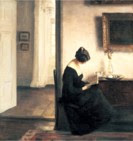
In November, my thoughts turn to Remembrance Day & I often decide to read about WWI & WWII. This year, I’ve begun with the poets of WWI. I first read Wilfred Owen, Siegfried Sassoon & Rupert Brooke as a teenager & I’m still moved by their work & their lives. Since then, I’ve read many anthologies, biographies & critical books about the period & the writers.
John Lehmann’s book, English Poets of the First World War, was published in 1981. I rescued this copy from a library book sale & I’ve been reading it over the last couple of days as well as dipping into some of the other books you can see in the photo below. Lehmann concentrates on 15 major poets & looks at the work they wrote during the war, rather than the poetry & prose they wrote long afterwards, if, indeed, they survived. The poetry of the war fell into two distinct phases.
From the beginning of the war in 1914 until the Battle of the Somme in 1916, it was still possible for patriotic young men to write poetry glorifying war & revelling in the opportunity to be a part of this great adventure. Rupert Brooke’s 1914 Sonnets & Julian Grenfell’s Into Battle are the most famous examples. Brooke & Grenfell both died in 1915 so there’s no way of knowing how their work would have changed as the optimism of the first part of the war was replaced by the despair of trench warfare that seemed neverending. Another poet who was killed in 1915 at the age of 20 was Charles Hamilton Sorley (the photo above is from the suffolkregiment.org website). I’ve always loved this poem. The image of the dead being oblivious to our pity & grief is intensely moving & comforting as well. Their pain is past.
When you see millions of the mouthless dead
Across your dreams in pale battalions go,
Say not soft things as other men have said,
That you’ll remember. For you need not so.
Give them not praise. For, deaf, how should they know
It is not curses heaped on each gashed head?
Nor tears. Their blind eyes see not your tears flow.
Nor honour. It is easy to be dead.
Say only this, ‘They are dead.’ Then add thereto,
‘Yet many a better one has died before.’
Then, scanning all the o’ercrowded mass, should you
Perceive one face that you loved heretofore,
It is a spook. None wears the face you knew.
Great death has made all his for evermore.
Sassoon & Owen are the most famous of the war poets. Their meeting at the hospital at Craiglockhart has been written about many times, both as fact & fiction. That meeting led to Owen’s miraculous last year when he wrote the poems that made his name after his death just a week before the Armistice. Sassoon survived the war & continued writing poetry but his War Poems remained his most famous & best-loved work. He also wrote three volumes of fictionalised autobiography, collected by Faber as The Complete Memoirs of George Sherston. His poem, Does It Matter?, exemplifies the bitter, almost brutal poetry of the last years of the war. The feeling of hopelessness & pity of the speaker contrasts with the bitter undertone accusing those safe at home of not valuing the sacrifice made by the men at the Front.
Does it matter? – losing your legs?...
For people will always be kind,
And you need not show that you mind
When the others come in after hunting
To gobble their muffins and eggs.
Does it matter? – losing your sight?...
There’s such splendid work for the blind;
And people will always be kind,
As you sit on the terrace remembering
And turning your face to the light.
Do they matter? – those dreams from the pit?...
You can drink and forget and be glad,
And people won’t say that you’re mad;
For they’ll know that you’ve fought for your country,
And no one will worry a bit.
Wilfred Owen could also write with bitterness of the horrors of war but I find the quiet, elegiac tone of Anthem for Doomed Youth so moving. The final image of the families left at home for long years without the men who will never come home, quietly grieving in that long period of mourning after the war is filled with melancholy.
What passing-bells for these who die as cattle?
- Only the monstrous anger of the guns.
Only the stuttering rifles’ rapid rattle
Can patter out their hasty orisons.
No mockeries now for them; no prayers nor bells;
Nor any voice of mourning save the choirs,-
The shrill, demented choirs of wailing shells;
And bugles calling for them from sad shires.
What candles may be held to speed them all?
Not in the hands of boys, but in their eyes
Shall shine the holy glimmers of goodbyes.
The pallor of girls’ brows shall be their pall;
Their flowers the tenderness of patient minds,
And each slow dusk a drawing-down of blinds.
Isaac Rosenberg was killed in April 1918 (The photo below is from iwm.org.uk). His poem, Break of Day in the Trenches, is a meditation in a moment of peace before the madness of battle. It reminds me of John Donne & the metaphysical poets in the humour in which he sticks a poppy behind his ear & addresses a rat that has strayed into his trench from No Man’s Land.
The darkness crumbles away -
It is the same old druid Time as ever.
Only a live thing leaps my hand –
A queer sardonic rat –
As I pull the parapet’s poppy
To stick behind my ear.
Droll rat, they would shoot you if they knew
Your cosmopolitan sympathies.
Now you have touched this English hand
You will do the same to a German –
Soon, no doubt, if it be your pleasure
To cross the sleeping green between.
It seems you inwardly grin as you pass
Strong eyes, fine limbs, haughty athletes
Less chanced than you for life,
Bonds to the whims of murder,
Sprawled in the bowels of the earth,
The torn fields of France.
What do you see in our eyes
At the shrieking iron and flame
Hurled through still heavens?
What quaver – what heart aghast?
Poppies whose roots are in man’s veins
Drop, and are ever dropping;
But mine in my ear is safe,
Just a little white with the dust.
John Lehmann’s book is an excellent introduction to the WWI poets but it might be hard to get hold of. Jon Silkin’s Penguin Book of First World War Poetry (1979) has an extensive Introduction & there should be lots of second hand copies around. There’s an updated Penguin Book of First World War Poetry (2006) edited by Matthew George Walter which is in print but I haven’t seen it. Penguin Classics always have good notes & introductions so I’m sure this would be a good choice. I’ll continue my Remembrance reading throughout the month.
Monday, November 8, 2010
Sunday, November 7, 2010
NYRB Reading Week - Jessica Mitford
It’s NYRB Reading Week & I haven’t chosen any of the NYRB titles sitting on the tbr shelves. I borrowed one from the library instead. I’m continuing my Mitford theme this year with Jessica Mitford’s Poison Penmanship : the gentle art of muckraking. This is a collection of articles Mitford wrote for various American magazines. Most of the articles come under the heading of muckraking, “one who seeks out and publishes scandals and the like about prominent people”, as Mitford quotes in her Introduction from the OED.
Mitford was first called Queen of the Muckrakers by Time magazine after her article on the Famous Writers School was published. This is one of the most interesting articles in the book. The Famous Writers School was a company that put big, full-page ads in magazines & newspapers to sell their correspondence courses on how to be a freelance writer. They exaggerated the ease of becoming a freelance & how much money one could earn. Their door-to-door salesmen used hard sell tactics & they engaged well-known writers to lend their names to the ads. It turned out that these writers had very little to do with the company, apart from accepting large fees for the use of their name & photo. They didn’t teach the courses, read the submissions & hadn’t even read the course material. The courses were expensive & most of the students never completed the assignments. They were dissatisfied with the lack of direction & personal contact. Not surprising when each assignment would be corrected by a different person, using standard phrases & jargon from a script they followed.
Mitford’s article was published in Atlantic Magazine, but only after it had been rejected by several other journals because they were afraid of losing the advertising revenue they made from the Famous Writers School. When the article was published, the reaction was immediate. Stock in the company plunged & their profits dropped dramatically. A wonderful example of the power of the Press to alert consumers to a scam & expose crooks. Even more interesting than the articles are the Comments Mitford adds at the end of each one. She sets the article in context & examines the impact the article had, what she would have done differently, & how she went about researching & structuring the piece.
The most famous article in the collection is St Peter, Don’t You Call Me, which is about the funeral business. This led to the bestselling book, The American Way of Death. The article examines the way funeral directors take advantage of grieving families to make a profit. There are many wonderful examples of the euphemistic language used to describe coffins, shrouds, embalming techniques. It’s funny & gruesome at the same time. It’s also shocking to realise how often funeral directors would discreetly find out how much families could afford to pay & tailor the costs so they would exactly match the amount of the insurance payout or funeral plan fund. Mitford’s article led to a backlash against unnecessarily expensive funerals & the growth of co-operative societies that provided a service while keeping costs down.
In the Introduction, Mitford explains how to research such articles. The importance of getting hold of trade journals for background information (this was crucial in the funeral article), compiling a list of questions ranging from Kind to Cruel when interviewing potentially hostile subjects, how to structure the article & avoid libel actions. Poison Penmanship could still be used as a textbook for journalism students today, although, as it was originally published in the 1970s, they would have to take account of the internet as a research tool. I read Jessica Mitford’s Letters earlier this year & it was fascinating to read the articles she wrote about in her letters. It enriched the experience of reading this book so much. I’d recommend the letters to anyone who loves reading other people’s letters but they also gave a lot of insight into the process of researching & writing these articles as she often wrote to family & friends while she was working on them. Poison Penmanship is an insight into radical journalism in the 60s & 70s when it was perhaps easier to enrage & shock the public about injustice & dishonesty than it is today.
You can find all the details of NYRB Reading Week on The Literary Stew & Coffeespoons blogs, where you’ll also find links to lots of other reviews of NYRB titles. It's not too late to join in if you have NYRB books on the tbr shelves, and there are prizes to be won for posting a review. Thank you to Mrs B & Honey for hosting the Reading Week.
Mitford was first called Queen of the Muckrakers by Time magazine after her article on the Famous Writers School was published. This is one of the most interesting articles in the book. The Famous Writers School was a company that put big, full-page ads in magazines & newspapers to sell their correspondence courses on how to be a freelance writer. They exaggerated the ease of becoming a freelance & how much money one could earn. Their door-to-door salesmen used hard sell tactics & they engaged well-known writers to lend their names to the ads. It turned out that these writers had very little to do with the company, apart from accepting large fees for the use of their name & photo. They didn’t teach the courses, read the submissions & hadn’t even read the course material. The courses were expensive & most of the students never completed the assignments. They were dissatisfied with the lack of direction & personal contact. Not surprising when each assignment would be corrected by a different person, using standard phrases & jargon from a script they followed.
Mitford’s article was published in Atlantic Magazine, but only after it had been rejected by several other journals because they were afraid of losing the advertising revenue they made from the Famous Writers School. When the article was published, the reaction was immediate. Stock in the company plunged & their profits dropped dramatically. A wonderful example of the power of the Press to alert consumers to a scam & expose crooks. Even more interesting than the articles are the Comments Mitford adds at the end of each one. She sets the article in context & examines the impact the article had, what she would have done differently, & how she went about researching & structuring the piece.
The most famous article in the collection is St Peter, Don’t You Call Me, which is about the funeral business. This led to the bestselling book, The American Way of Death. The article examines the way funeral directors take advantage of grieving families to make a profit. There are many wonderful examples of the euphemistic language used to describe coffins, shrouds, embalming techniques. It’s funny & gruesome at the same time. It’s also shocking to realise how often funeral directors would discreetly find out how much families could afford to pay & tailor the costs so they would exactly match the amount of the insurance payout or funeral plan fund. Mitford’s article led to a backlash against unnecessarily expensive funerals & the growth of co-operative societies that provided a service while keeping costs down.
In the Introduction, Mitford explains how to research such articles. The importance of getting hold of trade journals for background information (this was crucial in the funeral article), compiling a list of questions ranging from Kind to Cruel when interviewing potentially hostile subjects, how to structure the article & avoid libel actions. Poison Penmanship could still be used as a textbook for journalism students today, although, as it was originally published in the 1970s, they would have to take account of the internet as a research tool. I read Jessica Mitford’s Letters earlier this year & it was fascinating to read the articles she wrote about in her letters. It enriched the experience of reading this book so much. I’d recommend the letters to anyone who loves reading other people’s letters but they also gave a lot of insight into the process of researching & writing these articles as she often wrote to family & friends while she was working on them. Poison Penmanship is an insight into radical journalism in the 60s & 70s when it was perhaps easier to enrage & shock the public about injustice & dishonesty than it is today.
You can find all the details of NYRB Reading Week on The Literary Stew & Coffeespoons blogs, where you’ll also find links to lots of other reviews of NYRB titles. It's not too late to join in if you have NYRB books on the tbr shelves, and there are prizes to be won for posting a review. Thank you to Mrs B & Honey for hosting the Reading Week.
Saturday, November 6, 2010
And furthermore - Judi Dench
Judi Dench is one of the best-loved actors in the world. She’s a National Treasure in the UK & has had a long career on stage, screen & TV. I’ve just read her autobiography And Furthermore. Actually, in the Preface, Dame Judi says it's not an autobiography, more a follow-up to the other books John Miller has written about her career. It's an enjoyable book, full of anecdotes about her career, the actors & directors she’s worked with, the productions she’s enjoyed & the few she hasn’t. There’s very little about her personal life. Her childhood in York; her time at the Quaker school, The Mount; her early desire to be a theatre designer & then the realisation that she wouldn’t have been able to do the job to her own satisfaction; discovering that acting was what she really wanted to do are dealt with in a short first chapter.
Her marriage to Michael Williams & their happy 30 years together are barely mentioned. She talks about the productions they were in together but nothing more personal. She writes about the house she & Michael bought for themselves, their daughter, Finty, & their parents to live in. I would have liked to know more about how that worked. Three generations living together was the norm for hundreds of years but by the late 20th century it was unusual. Judi Dench is reticent about all these more personal areas of her life & I respect that reticence. This is no tell-all book about the awful life she’s had & the horrible people who have made her life a misery.
It’s the story of her professional life & if you’re even mildly interested in the British stage over the last 60 years, you will be enthralled, as I was, in her stories about the great actors of the last century. John Gielgud, Peggy Ashcroft, Maggie Smith, Joan Plowright, Kenneth Branagh, Ian McKellen are all written about fondly. One of the best chapters is about Dame Judi’s directing debut for Kenneth Branagh’s production of Much Ado About Nothing. I really got a feeling of being in the rehearsal room. I could feel her surprise, terror & delight at being on the other side of the fence for a change. This section of the book really came alive, after a long series of anecdotes about productions of Shakespeare interspersed with her film & television roles.
Movies came late in her career with Oscar-nominated performances as Queen Victoria in Mrs Brown & Queen Elizabeth in Shakespeare in Love, when she won the Oscar for “eight quick minutes with bad teeth” as Dame Judi memorably describes her performance! Her role as the first female M in the James Bond movies is her most high-profile role.
The book is “as told to John Miller” & that’s probably why it feels like a series of interviews. I did have a real sense of Dame Judi’s voice telling me the stories but there isn’t a lot of depth. John Miller has written a biography of Dame Judi, With a Crack In Her Voice as well as Darling Judi, a celebration of her career & a book of photos & anecdotes, Scenes From My Life. The “as told to” is probably why the book wasn’t as engaging as I’d hoped, but I did enjoy reading it. I’m interested in the theatre & I’ve seen a lot of Dame Judi’s film & TV work so I was interested to read her stories of working on those productions. The photos are also terrific, mostly from her own collection. So, definitely a book for the fans, but there are a lot of us out there. I have the DVD of her wonderful performance in Macbeth with Ian McKellen & also a new release DVD I borrowed from work called Playing Shakespeare, a series of master classes with RSC actors, including Dame Judi. I'm looking forward to watching both of these even more after reading And Furthermore.
Her marriage to Michael Williams & their happy 30 years together are barely mentioned. She talks about the productions they were in together but nothing more personal. She writes about the house she & Michael bought for themselves, their daughter, Finty, & their parents to live in. I would have liked to know more about how that worked. Three generations living together was the norm for hundreds of years but by the late 20th century it was unusual. Judi Dench is reticent about all these more personal areas of her life & I respect that reticence. This is no tell-all book about the awful life she’s had & the horrible people who have made her life a misery.
It’s the story of her professional life & if you’re even mildly interested in the British stage over the last 60 years, you will be enthralled, as I was, in her stories about the great actors of the last century. John Gielgud, Peggy Ashcroft, Maggie Smith, Joan Plowright, Kenneth Branagh, Ian McKellen are all written about fondly. One of the best chapters is about Dame Judi’s directing debut for Kenneth Branagh’s production of Much Ado About Nothing. I really got a feeling of being in the rehearsal room. I could feel her surprise, terror & delight at being on the other side of the fence for a change. This section of the book really came alive, after a long series of anecdotes about productions of Shakespeare interspersed with her film & television roles.
Movies came late in her career with Oscar-nominated performances as Queen Victoria in Mrs Brown & Queen Elizabeth in Shakespeare in Love, when she won the Oscar for “eight quick minutes with bad teeth” as Dame Judi memorably describes her performance! Her role as the first female M in the James Bond movies is her most high-profile role.
The book is “as told to John Miller” & that’s probably why it feels like a series of interviews. I did have a real sense of Dame Judi’s voice telling me the stories but there isn’t a lot of depth. John Miller has written a biography of Dame Judi, With a Crack In Her Voice as well as Darling Judi, a celebration of her career & a book of photos & anecdotes, Scenes From My Life. The “as told to” is probably why the book wasn’t as engaging as I’d hoped, but I did enjoy reading it. I’m interested in the theatre & I’ve seen a lot of Dame Judi’s film & TV work so I was interested to read her stories of working on those productions. The photos are also terrific, mostly from her own collection. So, definitely a book for the fans, but there are a lot of us out there. I have the DVD of her wonderful performance in Macbeth with Ian McKellen & also a new release DVD I borrowed from work called Playing Shakespeare, a series of master classes with RSC actors, including Dame Judi. I'm looking forward to watching both of these even more after reading And Furthermore.
Tuesday, November 2, 2010
Effie : a Victorian scandal - Merryn Williams
Effie Gray was married to two of the giants of the Victorian art world. When she was not quite 18, she married John Ruskin, the most famous art critic of the day. Their marriage was famously unconsummated & after six years of increasingly unhappy frustration, Effie had her marriage annulled. After a year or so, she married the Pre-Raphaelite artist, John Everett Millais. The story of Effie’s marriage & the way it ended was the greatest scandal of the 1850s & the consequences haunted all three of the participants until the end of their lives.
The story of Effie, Ruskin & Millais is a fascinating one. John Ruskin had known Effie & her family for some years. The Grays lived in the house where Ruskin’s grandfather had lived & where he committed suicide. Ruskin’s parents, especially his mother, were so horrified by this that they left Scotland, never to return. When Ruskin & Effie were married, they lived very closely with the elder Ruskins for much of the time. Ruskin was devoted to his parents & they considered him a genius. Effie was quite innocent & didn’t really understand what the physical relationship should be between a husband & wife. There are many theories as to why Ruskin didn’t or couldn’t consummate the marriage. He claimed that Effie had agreed initially not to have a physical relationship as they planned to travel & if she became pregnant it would interfere with their plans. Then, they decided that the marriage would be consummated when Effie was 25. Another theory was that Ruskin had never seen a naked woman, only classical statues & was revolted by Effie’s body. Ruskin also seemed more attracted to quite young women. He first knew Effie when she was just in her teens & his later relationship with Rose La Touche followed a similar pattern. As the girls grew older, his interest in them waned.
Effie felt this lack of interest in her personally as well as the physical rejection. Her relationship with her husband grew more distant as he would go out in the morning to work in his parents’ house close by, leaving her alone all day. She was forced to spend a lot of time with her mother-in-law who was not a sympathetic woman. Her attempts to discuss their relationship with Ruskin were rebuffed & her feelings of loneliness & dissatisfaction grew as the years passed. Effie’s parents were concerned about the amount of time Effie & Ruskin spent apart but she hadn’t told them the truth about her marriage.
The catalyst for change was Ruskin’s involvement with the Pre-Raphaelite Brotherhood. This was a group of young artists who burst on to the London art scene in the late 1840s. Their reverence for early artists like Raphael & their desire to strip away the conventions of the artistic establishment & paint in a purer, more natural way, at first found little favour at the Royal Academy. At the core of the group were Dante Gabriel Rossetti, William Holman Hunt & John Everett Millais. Millais was a boy genius, the youngest artist ever accepted at the Royal Academy schools. Although Ruskin was at first scathing about their work & the subjects they chose, he eventually came to recognise their talent & champion their work.
He invited Millais to accompany himself & Effie on a trip to Scotland so that Millais could paint his portrait. The trip to Glenfinlas resulted in a magnificent portrait of Ruskin staring down a Highland stream, water rushing past him as he contemplates his genius (image above from minutiarum.blogspot.com). Millais & Effie became friends & spent a lot of time together when Ruskin was working. When they returned to London, Millais asked if Effie would model for a figure in one of his greatest pictures, The Order of Release (seen below from the Wikimedia Commons website). Ruskin was happy to agree & it was during the sessions in Millais’s studio that they fell in love. Effie confided to Millais about the state of her marriage & he was torn between his love for Effie & his loyalty & gratitude to Ruskin.
Effie’s 25th birthday passed & Ruskin now declared that he wouldn’t consummate the marriage because he feared Effie was mentally ill & shouldn’t have children. By this time, the last thing Effie wanted was for her marriage to be consummated. She told her parents the true state of affairs & her father, a lawyer, investigated her legal options. Divorce was almost impossible in the Victorian period & Effie’s reputation would be ruined by the scandal. The Church eventually granted her an annulment of her marriage on the grounds of non-consummation & in their judgment said that it was as if she had never been married at all. Ruskin wrote an extraordinary document outlining his side of the story but it was never used as he decided not to contest the action. It was only discovered & published more than 70 years later. He seems to have honestly believed that Effie’s wish to consummate the marriage was unreasonable & a symptom of her diseased mind.
The scandal among London’s artistic community was enormous. Ruskin was the butt of some very crude jokes among the younger men although his standing as a critic remained intact. Effie retreated to her family home, having no contact with Millais for over a year to avoid any more scandal. They were married in 1855 & enjoyed a long & happy marriage. This story is fascinating for the light it throws on Victorian attitudes towards marriage. Many people blamed Effie for the whole scandal. They thought she should have accepted whatever her husband decided & that she was deliberately trying to ruin his reputation. Her decision to have the marriage annulled was seen as deeply unfeminine & immodest. She had to undergo several physical examinations to prove her virginity to make her case.
Supporters of Ruskin, including his 20th century biographers, have seen Effie as a commonplace woman who made a great man into a laughing stock. There were rumours that Effie & Millais had started an affair on the trip to Scotland & had been deceiving Ruskin all the time. Ruskin’s parents turned against Effie completely & thought her mad or bad. The story refused to go away. Years later when Ruskin became involved with the La Touche family & fell in love with the young Rose, Mrs La Touche wrote to Effie to ask about the circumstances of her marriage to Ruskin. She was wary of Ruskin’s interest in her daughter, almost 30 years his junior, & concerned as to what his intentions were. This correspondence brought all the memories of her life with Ruskin back but Effie bravely wrote detailed responses to Mrs La Touche, telling her all she knew of Ruskin without bitterness or reproach. She knew how devastated she had been by the experience & wanted to prevent another young girl suffering in the same way.
Merryn Williams has written a fascinating book about this story. She has also come up with an intriguing theory that I hadn’t heard before. Williams believes that George Eliot was influenced by the story of Effie & Ruskin when she wrote her masterpiece, Middlemarch. It seems obvious now that it’s been suggested to me. The story of Dorothea married to the dry scholar, Casaubon, & falling in love with the young artist, Will Ladislaw, is very close to the story of the Ruskins & Millais. The conventions of fiction mean that Dorothea doesn’t have to endure the scandal of an annulment or a divorce to escape her marriage but there are parallels. I really enjoyed this book. I’ve read many books about the Pre-Raphaelites & I knew the story but it was fascinating to follow the events in such detail. There are lots of quotes from the letters & statements of all the protagonists. I especially enjoyed the insight into personal relationships & the expectations of society. I admired Effie’s courage in exposing herself to rumour & embarrassment in her quest to change her life & escape from an unhappy situation.
The story of Effie, Ruskin & Millais is a fascinating one. John Ruskin had known Effie & her family for some years. The Grays lived in the house where Ruskin’s grandfather had lived & where he committed suicide. Ruskin’s parents, especially his mother, were so horrified by this that they left Scotland, never to return. When Ruskin & Effie were married, they lived very closely with the elder Ruskins for much of the time. Ruskin was devoted to his parents & they considered him a genius. Effie was quite innocent & didn’t really understand what the physical relationship should be between a husband & wife. There are many theories as to why Ruskin didn’t or couldn’t consummate the marriage. He claimed that Effie had agreed initially not to have a physical relationship as they planned to travel & if she became pregnant it would interfere with their plans. Then, they decided that the marriage would be consummated when Effie was 25. Another theory was that Ruskin had never seen a naked woman, only classical statues & was revolted by Effie’s body. Ruskin also seemed more attracted to quite young women. He first knew Effie when she was just in her teens & his later relationship with Rose La Touche followed a similar pattern. As the girls grew older, his interest in them waned.
Effie felt this lack of interest in her personally as well as the physical rejection. Her relationship with her husband grew more distant as he would go out in the morning to work in his parents’ house close by, leaving her alone all day. She was forced to spend a lot of time with her mother-in-law who was not a sympathetic woman. Her attempts to discuss their relationship with Ruskin were rebuffed & her feelings of loneliness & dissatisfaction grew as the years passed. Effie’s parents were concerned about the amount of time Effie & Ruskin spent apart but she hadn’t told them the truth about her marriage.
The catalyst for change was Ruskin’s involvement with the Pre-Raphaelite Brotherhood. This was a group of young artists who burst on to the London art scene in the late 1840s. Their reverence for early artists like Raphael & their desire to strip away the conventions of the artistic establishment & paint in a purer, more natural way, at first found little favour at the Royal Academy. At the core of the group were Dante Gabriel Rossetti, William Holman Hunt & John Everett Millais. Millais was a boy genius, the youngest artist ever accepted at the Royal Academy schools. Although Ruskin was at first scathing about their work & the subjects they chose, he eventually came to recognise their talent & champion their work.
He invited Millais to accompany himself & Effie on a trip to Scotland so that Millais could paint his portrait. The trip to Glenfinlas resulted in a magnificent portrait of Ruskin staring down a Highland stream, water rushing past him as he contemplates his genius (image above from minutiarum.blogspot.com). Millais & Effie became friends & spent a lot of time together when Ruskin was working. When they returned to London, Millais asked if Effie would model for a figure in one of his greatest pictures, The Order of Release (seen below from the Wikimedia Commons website). Ruskin was happy to agree & it was during the sessions in Millais’s studio that they fell in love. Effie confided to Millais about the state of her marriage & he was torn between his love for Effie & his loyalty & gratitude to Ruskin.
Effie’s 25th birthday passed & Ruskin now declared that he wouldn’t consummate the marriage because he feared Effie was mentally ill & shouldn’t have children. By this time, the last thing Effie wanted was for her marriage to be consummated. She told her parents the true state of affairs & her father, a lawyer, investigated her legal options. Divorce was almost impossible in the Victorian period & Effie’s reputation would be ruined by the scandal. The Church eventually granted her an annulment of her marriage on the grounds of non-consummation & in their judgment said that it was as if she had never been married at all. Ruskin wrote an extraordinary document outlining his side of the story but it was never used as he decided not to contest the action. It was only discovered & published more than 70 years later. He seems to have honestly believed that Effie’s wish to consummate the marriage was unreasonable & a symptom of her diseased mind.
The scandal among London’s artistic community was enormous. Ruskin was the butt of some very crude jokes among the younger men although his standing as a critic remained intact. Effie retreated to her family home, having no contact with Millais for over a year to avoid any more scandal. They were married in 1855 & enjoyed a long & happy marriage. This story is fascinating for the light it throws on Victorian attitudes towards marriage. Many people blamed Effie for the whole scandal. They thought she should have accepted whatever her husband decided & that she was deliberately trying to ruin his reputation. Her decision to have the marriage annulled was seen as deeply unfeminine & immodest. She had to undergo several physical examinations to prove her virginity to make her case.
Supporters of Ruskin, including his 20th century biographers, have seen Effie as a commonplace woman who made a great man into a laughing stock. There were rumours that Effie & Millais had started an affair on the trip to Scotland & had been deceiving Ruskin all the time. Ruskin’s parents turned against Effie completely & thought her mad or bad. The story refused to go away. Years later when Ruskin became involved with the La Touche family & fell in love with the young Rose, Mrs La Touche wrote to Effie to ask about the circumstances of her marriage to Ruskin. She was wary of Ruskin’s interest in her daughter, almost 30 years his junior, & concerned as to what his intentions were. This correspondence brought all the memories of her life with Ruskin back but Effie bravely wrote detailed responses to Mrs La Touche, telling her all she knew of Ruskin without bitterness or reproach. She knew how devastated she had been by the experience & wanted to prevent another young girl suffering in the same way.
Merryn Williams has written a fascinating book about this story. She has also come up with an intriguing theory that I hadn’t heard before. Williams believes that George Eliot was influenced by the story of Effie & Ruskin when she wrote her masterpiece, Middlemarch. It seems obvious now that it’s been suggested to me. The story of Dorothea married to the dry scholar, Casaubon, & falling in love with the young artist, Will Ladislaw, is very close to the story of the Ruskins & Millais. The conventions of fiction mean that Dorothea doesn’t have to endure the scandal of an annulment or a divorce to escape her marriage but there are parallels. I really enjoyed this book. I’ve read many books about the Pre-Raphaelites & I knew the story but it was fascinating to follow the events in such detail. There are lots of quotes from the letters & statements of all the protagonists. I especially enjoyed the insight into personal relationships & the expectations of society. I admired Effie’s courage in exposing herself to rumour & embarrassment in her quest to change her life & escape from an unhappy situation.
Sunday, October 31, 2010
Dead Man's Chest - Kerry Greenwood
Phryne Fisher, private detective, is taking her family (companion Dot Williams, adopted daughters Ruth & Jane & dog, Molly) to Queenscliff for the summer holidays. She arrives at the house loaned to her by anthropologist, Mr Thomas, to find the house shut up, the Johnsons (cook & butler) missing & the house ransacked. This is not the relaxing holiday Phryne had planned. However, nothing daunts Phryne Fisher. Beautiful, elegant, rich, intelligent & always beautifully dressed, Phryne is determined to get to the bottom of the mystery. Along the way, she also has to discover the identity of a phantom hair slasher, who cuts off the plaits of unsuspecting women & maybe find the treasure of Benito, the pirate rumoured to have hidden his treasure in one of the many caves on the coast near Queenscliff. Phryne also helps Detective Hugh Collins (Dot’s fiancĂ©) from Melbourne break up a rum & tobacco smuggling operation, attends a party hosted by the local Surrealists & gives us a glimpse of Australia’s early film industry.
Phryne is the perfect fantasy figure. The series is set in 1920s Melbourne, apart from this excursion to the coast, & Phryne is the woman who has everything. She grew up poor & inherited wealth as a young woman so she appreciates what she has. She’s the perfect clothes horse, slim, elegantly proportioned with green eyes & a black Lulu bob. She drives her Hispano-Suiza with dash & handles her Beretta with deadly accuracy when required. She can also eat whatever she wants & never put on weight. She’s kind, practical, non-judgmental but doesn’t suffer fools gladly & is ruthless with evildoers.
Kerry Greenwood’s research on the period is impeccable. She wrote a thesis about the Melbourne dock workers strike in the 1920s & then used the research for the Phryne books. I’ve been on a walk through 1920s Melbourne with Kerry at a Melbourne Writers Festival some years ago & her knowledge of the architecture & history of the period is terrific. There’s still a lot of 1920s Melbourne left, the 1960s developers didn’t knock it all down. You can see most of it by just looking up above the awnings of current buildings to see the facades of the original buildings still intact. The walk ended with afternoon tea at the Windsor Hotel, which will surprise no one who’s ever read a Phryne Fisher mystery! Actually, the food is one of the great pleasures of reading Kerry Greenwood. Phryne’s adopted daughter, Ruth, wants to be a cook & is given the chance to try her skills as the Johnsons have disappeared. She’s working her way through Mrs Leyel’s The Gentle Art of Cookery & so we’re treated to luscious descriptions of egg & bacon pie, roast lamb & chutney sandwiches, strawberry gateau & impossible pie (recipe at the back of the book).
Kerry Greenwood also writes another series of mysteries set in contemporary Melbourne. Corinna Chapman is a baker who lives in an Art Deco building above her bakery, Earthly Delights. The tenants of the building, Corinna’s apprentice (who’s trying to create the perfect muffin), her cats & gorgeous lover Daniel, all bring mysteries to her door. The emphasis on food & cats makes this series even more fun, along with the familiarity of Melbourne. Corinna also hates the heat of summer & the commercialism of Christmas, so she’s a woman after my own heart! Kerry’s books have been published in the US by Poisoned Pen Press & I’d recommend them to anyone who loves a good mystery with style, elegance, cats & food.
Phryne is the perfect fantasy figure. The series is set in 1920s Melbourne, apart from this excursion to the coast, & Phryne is the woman who has everything. She grew up poor & inherited wealth as a young woman so she appreciates what she has. She’s the perfect clothes horse, slim, elegantly proportioned with green eyes & a black Lulu bob. She drives her Hispano-Suiza with dash & handles her Beretta with deadly accuracy when required. She can also eat whatever she wants & never put on weight. She’s kind, practical, non-judgmental but doesn’t suffer fools gladly & is ruthless with evildoers.
Kerry Greenwood’s research on the period is impeccable. She wrote a thesis about the Melbourne dock workers strike in the 1920s & then used the research for the Phryne books. I’ve been on a walk through 1920s Melbourne with Kerry at a Melbourne Writers Festival some years ago & her knowledge of the architecture & history of the period is terrific. There’s still a lot of 1920s Melbourne left, the 1960s developers didn’t knock it all down. You can see most of it by just looking up above the awnings of current buildings to see the facades of the original buildings still intact. The walk ended with afternoon tea at the Windsor Hotel, which will surprise no one who’s ever read a Phryne Fisher mystery! Actually, the food is one of the great pleasures of reading Kerry Greenwood. Phryne’s adopted daughter, Ruth, wants to be a cook & is given the chance to try her skills as the Johnsons have disappeared. She’s working her way through Mrs Leyel’s The Gentle Art of Cookery & so we’re treated to luscious descriptions of egg & bacon pie, roast lamb & chutney sandwiches, strawberry gateau & impossible pie (recipe at the back of the book).
Kerry Greenwood also writes another series of mysteries set in contemporary Melbourne. Corinna Chapman is a baker who lives in an Art Deco building above her bakery, Earthly Delights. The tenants of the building, Corinna’s apprentice (who’s trying to create the perfect muffin), her cats & gorgeous lover Daniel, all bring mysteries to her door. The emphasis on food & cats makes this series even more fun, along with the familiarity of Melbourne. Corinna also hates the heat of summer & the commercialism of Christmas, so she’s a woman after my own heart! Kerry’s books have been published in the US by Poisoned Pen Press & I’d recommend them to anyone who loves a good mystery with style, elegance, cats & food.
Saturday, October 30, 2010
Library Latest
So many terrific books have arrived at work all at once that I don’t quite know what to read first. I shared the results of my recent splurge at the Book Depository here just a couple of weeks ago & I also have groaning tbr shelves as you can see below (I took these photos a few months ago. It’s too dull this morning to take a decent photo, but I’m sure you get the general idea!). And, it’s almost November so I’ll be choosing some Remembrance reading from the tbr shelves as I do every year. Luckily I have a week’s holiday coming up in the middle of the month & I’m looking forward to getting lots of reading done then, as well as my Christmas baking & some gardening if the weather is fine. Here’s what I’ve brought home from my library over the past couple of weeks,
The Small Hand – Susan Hill. This is her new ghost story & I always enjoy these. Nothing has ever scared me as much as The Woman in Black but I love a good ghost story.
The Attenbury Emeralds – Jill Paton Walsh. A new Lord Peter Wimsey story is a real treat. Jill Paton Walsh completed a couple of Dorothy L Sayers’s manuscripts some years ago & now she’s written a wholly original story. The theft of the Attenbury emeralds was Wimsey’s first case & there have been recent developments that send Wimsey, his wife Harriet & Bunter off on the hunt again.
The Magnificent Spilsbury and the case of the Brides in the Bath – Jane Robins. Edwardian true crime about the famous forensic scientist & the case that made his name.
All the hopeful lovers – William Nicholson. Dani at A Work In Progress has reviewed another of Nicholson's novels & it sounded enticing so I've now borrowed both of them from the library.
A Royal Passion – Katie Whitaker. A biography of Charles I & Henrietta Maria, concentrating on their relationship. The author found a cache of their passionate letters to each other, written when they were separated during the Civil War.
And furthermore – Judi Dench. I started flipping through this the other night & I could hear Dame Judi’s voice as I read. Lots of familiar stories but I love her work & I’m looking forward to more of her stories of stage, screen & famous co-stars.
Romantic Moderns – Alexandra Harris. The subtitle is English writers, artists & the imagination from Virginia Woolf to John Piper. A beautifully illustrated & produced book from Thames & Hudson about that between the wars period I love.
Revealing King Arthur – Christopher Gidlow. Arthur is another of my passions. This book combines history & archaeology to look at the evidence for Arthur.
Domestic soldiers – Jennifer Purcell. Women on the Home Front during WWII. The book uses the Mass Observation diaries of five women (including Nella Last) to tell the Home Front story in a very personal way.
Margaret Beaufort – Elizabeth Norton. Mother of Henry VII & a woman who led a fascinating life. Married & a mother by the age of 13, Margaret Beaufort was an ambitious woman who spent her whole life scheming to put her son on the throne of England.
At the moment I’m reading Kerry Greenwood’s new Phryne Fisher mystery, Dead Man’s Chest, but, after that, my choices are infinite.
The Small Hand – Susan Hill. This is her new ghost story & I always enjoy these. Nothing has ever scared me as much as The Woman in Black but I love a good ghost story.
The Attenbury Emeralds – Jill Paton Walsh. A new Lord Peter Wimsey story is a real treat. Jill Paton Walsh completed a couple of Dorothy L Sayers’s manuscripts some years ago & now she’s written a wholly original story. The theft of the Attenbury emeralds was Wimsey’s first case & there have been recent developments that send Wimsey, his wife Harriet & Bunter off on the hunt again.
The Magnificent Spilsbury and the case of the Brides in the Bath – Jane Robins. Edwardian true crime about the famous forensic scientist & the case that made his name.
All the hopeful lovers – William Nicholson. Dani at A Work In Progress has reviewed another of Nicholson's novels & it sounded enticing so I've now borrowed both of them from the library.
A Royal Passion – Katie Whitaker. A biography of Charles I & Henrietta Maria, concentrating on their relationship. The author found a cache of their passionate letters to each other, written when they were separated during the Civil War.
And furthermore – Judi Dench. I started flipping through this the other night & I could hear Dame Judi’s voice as I read. Lots of familiar stories but I love her work & I’m looking forward to more of her stories of stage, screen & famous co-stars.
Romantic Moderns – Alexandra Harris. The subtitle is English writers, artists & the imagination from Virginia Woolf to John Piper. A beautifully illustrated & produced book from Thames & Hudson about that between the wars period I love.
Revealing King Arthur – Christopher Gidlow. Arthur is another of my passions. This book combines history & archaeology to look at the evidence for Arthur.
Domestic soldiers – Jennifer Purcell. Women on the Home Front during WWII. The book uses the Mass Observation diaries of five women (including Nella Last) to tell the Home Front story in a very personal way.
Margaret Beaufort – Elizabeth Norton. Mother of Henry VII & a woman who led a fascinating life. Married & a mother by the age of 13, Margaret Beaufort was an ambitious woman who spent her whole life scheming to put her son on the throne of England.
At the moment I’m reading Kerry Greenwood’s new Phryne Fisher mystery, Dead Man’s Chest, but, after that, my choices are infinite.
Friday, October 29, 2010
William - E H Young
I’ve always believed that there’s a right time to read a book. I read Pride & Prejudice when I was 13 & I just didn’t get it. It made no sense to me at all. I didn’t begin to appreciate Jane Austen until I read Mansfield Park at university in my 20s. Everything just clicked & since then I’ve been a passionate Janeite & read all her novels several times & biographies & criticism etc etc. Although not such a revelatory moment as my discovery of Jane, this week I’ve read E H Young’s novel, William, after being inspired by Harriet Devine’s review. I’d started reading William several times over the past 25 years – yes, that’s how long he’s been languishing unread on my shelves. Reading Harriet’s review inspired me to get past the first few pages & get involved with the characters. This is why I never apologise for my overflowing tbr shelves. One day I will read all of those books. Every book (like dogs) will have its day. William had been unread longer than most because it was part of a set of facsimile Penguins I bought in 1985 to celebrate Penguin’s 50th anniversary.
The boxset was quite a bargain as I waited until the celebrations were over & it had been reduced by over 50% of the original price before I bought it. So, the box was shelved under P & almost forgotten. I love these old Penguins. Such soft, floppy covers & the original, fatter Penguin on the cover. But, there’s no blurb on the books. So, unless I knew the author – like Agatha Christie or Dorothy L Sayers – I didn’t have much incentive to pick up the other books in the box. I’d already read the Sayers & Christie as well as Andre Maurois’s Ariel, a biography of Shelley. Hemingway I’ve tried & failed with time & again. I think A Farewell to Arms will remain unread – for now, at least.
Since 1985, I’ve read some of the other books, mostly in the last few years as I’ve discovered the middlebrow novel. I’ve read Madame Claire & Beverley Nichols’s autobiography, Twenty-Five. And now, William.
E H Young was an interesting woman (you can see her in the middle of the bottom row in this picture of all the authors in the Penguin boxset). Born in 1880, she married a solicitor who was killed at Ypres during WWI. She moved to London & lived in a mĂ©nage a trois with her lover, Ralph Henderson & his wife. Henderson was a headmaster at a well-known school in Dulwich & I have to wonder how they managed to keep the relationship a secret in such a hothouse atmosphere. The mind boggles! After Henderson’s retirement, they lived together in Bradford-on Avon until Young’s death in 1949.
William is the story of a conventional family & the emotional fallout when one of the daughters causes a scandal. William Nesbitt is a successful ship owner in Radstowe. He’s worked his way up from being a sailor to owning & building the ships. He’s an affectionate husband to Kate & a fond father to all his children although he recognizes that he loves some more than others. His only son, Walter, works with him in the business & is married to Violet. His daughters’ marriages have been less successful. Dora is married to Herbert, an unattractive, overbearing man but she stays for the sake of her children. Dora is a kind, caring woman, stifled in a miserable marriage.
Mabel is married to self-righteous, pompous John. She has three sons who she has named Cromwell, Gladstone & Hampden, after John’s heroes. When I first read this, I thought they had been named Oliver, William & John but no, their Christian names are Cromwell, Gladstone & Hampden. Poor boys! Mabel is one of those irritating women who is forever saying she can’t afford this or that & acts the martyr in front of her well-off family trying to make them feel guilty. She runs from place to place to avoid paying for taxis, wears unattractive shoes because she’s too proud of her thrift to buy nice ones & mollycoddles her sensitive sons but also boasts of their intelligence & strength. Mabel is the one character in the book that no one else ever shows any real affection for. Even her mother is exasperated by her deliberate dowdiness & self-pity.
Janet, the youngest daughter, is still at home. Quiet, moody, & fancying herself in love with her brother-in-law, Oliver, Janet is the daughter that William wants to encourage to blossom. Lydia, married to Oliver, is the rebel daughter. William’s favourite, Lydia has married Oliver & moved to London, where they live a Bohemian life. Too many parties, late nights & unsuitable friends, according to Kate. Lydia leaves Oliver to live in the country with Henry Wyatt, a novelist, & causes a scandal that causes rifts within the Nesbitt family.
Kate’s response is anger & shame at the scandal. William wants Lydia to be happy & reluctantly faces the fact that he & Kate will never agree about Lydia. Dora is Lydia’s champion & defies her husband to visit her. Mabel is suitably shocked & appalled & Janet is miserable at the thought of Oliver’s unhappiness. This is a novel of relationships & E H Young is very good at illuminating these, especially the relationship of father & daughter. William is an immensely sympathetic character. His partiality for Lydia doesn’t blind him to the fact that she’s a very difficult person to live with. She found Oliver too compliant, too unchallenging but once she’s left him for Henry, she’s not entirely satisfied with her new lover either. William also tries to encourage Janet to fly the nest & meet new people away from her rather narrow life at home with her parents. I enjoyed William very much & I’m so grateful to Harriet for reminding me of E H Young & inspiring me to pick up one of her novels.
Now what next from the Penguin boxset? I'm listening to Compton Mackenzie's Monarch of the Glen on audio at the moment (read beautifully by David Rintoul) so maybe his Carnival? Or Mary Webb. Margaret at BooksPlease has been rereading Gone to Earth & I've always been curious about Webb because she's one of the authors mocked by Stella Gibbons in Cold Comfort Farm, one of my favourite books. I blogged about it here. I really should be reading a few of the huge stack of library books I have at the moment. More about them later...
The boxset was quite a bargain as I waited until the celebrations were over & it had been reduced by over 50% of the original price before I bought it. So, the box was shelved under P & almost forgotten. I love these old Penguins. Such soft, floppy covers & the original, fatter Penguin on the cover. But, there’s no blurb on the books. So, unless I knew the author – like Agatha Christie or Dorothy L Sayers – I didn’t have much incentive to pick up the other books in the box. I’d already read the Sayers & Christie as well as Andre Maurois’s Ariel, a biography of Shelley. Hemingway I’ve tried & failed with time & again. I think A Farewell to Arms will remain unread – for now, at least.
Since 1985, I’ve read some of the other books, mostly in the last few years as I’ve discovered the middlebrow novel. I’ve read Madame Claire & Beverley Nichols’s autobiography, Twenty-Five. And now, William.
E H Young was an interesting woman (you can see her in the middle of the bottom row in this picture of all the authors in the Penguin boxset). Born in 1880, she married a solicitor who was killed at Ypres during WWI. She moved to London & lived in a mĂ©nage a trois with her lover, Ralph Henderson & his wife. Henderson was a headmaster at a well-known school in Dulwich & I have to wonder how they managed to keep the relationship a secret in such a hothouse atmosphere. The mind boggles! After Henderson’s retirement, they lived together in Bradford-on Avon until Young’s death in 1949.
William is the story of a conventional family & the emotional fallout when one of the daughters causes a scandal. William Nesbitt is a successful ship owner in Radstowe. He’s worked his way up from being a sailor to owning & building the ships. He’s an affectionate husband to Kate & a fond father to all his children although he recognizes that he loves some more than others. His only son, Walter, works with him in the business & is married to Violet. His daughters’ marriages have been less successful. Dora is married to Herbert, an unattractive, overbearing man but she stays for the sake of her children. Dora is a kind, caring woman, stifled in a miserable marriage.
Mabel is married to self-righteous, pompous John. She has three sons who she has named Cromwell, Gladstone & Hampden, after John’s heroes. When I first read this, I thought they had been named Oliver, William & John but no, their Christian names are Cromwell, Gladstone & Hampden. Poor boys! Mabel is one of those irritating women who is forever saying she can’t afford this or that & acts the martyr in front of her well-off family trying to make them feel guilty. She runs from place to place to avoid paying for taxis, wears unattractive shoes because she’s too proud of her thrift to buy nice ones & mollycoddles her sensitive sons but also boasts of their intelligence & strength. Mabel is the one character in the book that no one else ever shows any real affection for. Even her mother is exasperated by her deliberate dowdiness & self-pity.
Janet, the youngest daughter, is still at home. Quiet, moody, & fancying herself in love with her brother-in-law, Oliver, Janet is the daughter that William wants to encourage to blossom. Lydia, married to Oliver, is the rebel daughter. William’s favourite, Lydia has married Oliver & moved to London, where they live a Bohemian life. Too many parties, late nights & unsuitable friends, according to Kate. Lydia leaves Oliver to live in the country with Henry Wyatt, a novelist, & causes a scandal that causes rifts within the Nesbitt family.
Kate’s response is anger & shame at the scandal. William wants Lydia to be happy & reluctantly faces the fact that he & Kate will never agree about Lydia. Dora is Lydia’s champion & defies her husband to visit her. Mabel is suitably shocked & appalled & Janet is miserable at the thought of Oliver’s unhappiness. This is a novel of relationships & E H Young is very good at illuminating these, especially the relationship of father & daughter. William is an immensely sympathetic character. His partiality for Lydia doesn’t blind him to the fact that she’s a very difficult person to live with. She found Oliver too compliant, too unchallenging but once she’s left him for Henry, she’s not entirely satisfied with her new lover either. William also tries to encourage Janet to fly the nest & meet new people away from her rather narrow life at home with her parents. I enjoyed William very much & I’m so grateful to Harriet for reminding me of E H Young & inspiring me to pick up one of her novels.
Now what next from the Penguin boxset? I'm listening to Compton Mackenzie's Monarch of the Glen on audio at the moment (read beautifully by David Rintoul) so maybe his Carnival? Or Mary Webb. Margaret at BooksPlease has been rereading Gone to Earth & I've always been curious about Webb because she's one of the authors mocked by Stella Gibbons in Cold Comfort Farm, one of my favourite books. I blogged about it here. I really should be reading a few of the huge stack of library books I have at the moment. More about them later...
Subscribe to:
Posts (Atom)